This one is usually not for the person whose lawn it is. If you are looking for the service overview rather than the funding question, see NDIS, senior and accessible lawn care. My Aged Care garden maintenance and NDIS gardening services are usually arranged by the adult child, the carer or the support coordinator trying to work out how someone keeps their garden under control when they can no longer do it themselves.
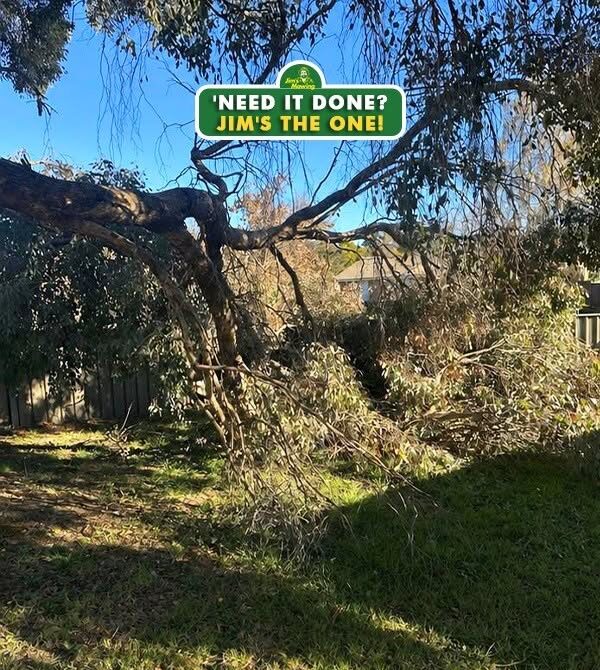
The garden matters more than it sounds. An overgrown yard becomes a trip hazard, a snake risk in summer, a fire risk in some areas, and often the thing that prompts a conversation about whether someone can still live independently.

Here is how it generally gets arranged.
Aged Care and NDIS Are Two Different Systems
Aged Care
Aged care lawn mowing sits inside home support programs for older Australians, which can include help with tasks around the home, and garden maintenance sits in that category alongside things like cleaning and home maintenance. Access generally starts with an assessment, which determines what supports a person is eligible for. From there, services are delivered through approved providers.
NDIS
For participants, yard maintenance may be funded where it relates to the person’s disability and their ability to maintain their home. It typically sits under the everyday-living side of a plan rather than therapy supports. Whether it is included depends on the individual plan and how it is managed.
Both systems change, and eligibility is decided case by case. So the practical advice is to start with the assessment or the plan rather than with the gardener, because that determines what is available.
Who Actually Arranges the Contractor
This is the part that confuses people, and it depends on how the funding is managed.
– Where a provider coordinates the services, the provider generally engages the contractor directly. The family often has little to do with it beyond agreeing to the arrangement.
– Where the participant or family self-manages or plan-manages, they choose the contractor themselves and the invoice goes through the plan.
– Where it is privately paid, it is a normal booking.
All three happen regularly. Jim’s franchisees work with providers who hold contracts across many properties, and directly with families paying privately, and everything in between.
What Providers Screen For
Speaking to franchisees who do this work, the requirements that come up are consistent, and they are not really about horticulture.
Reliability Above Everything
Providers are managing a lot of clients and cannot chase contractors. One franchisee in Orange, New South Wales described providers ringing around several contractors for a job and Jim’s being the one that turned up. That is what wins the ongoing work.
- Insurance. Every Jim’s franchisee carries $10 million public liability insurance, which is generally a baseline requirement for provider panels.
- Police checks. All Jim’s franchisees are police-checked. For work in the homes of vulnerable people, this is non-negotiable and providers will ask.
- Consistency of person. Older clients and NDIS participants often do much better with the same operator each visit rather than a rotating crew. Familiarity matters, and it is one of the practical advantages of a local franchisee servicing the same round.
- Clear invoicing. Providers need documentation that matches their systems.
What the Work Actually Involves
Lawn mowing for elderly clients is rarely just mowing.
Franchisees doing aged care and NDIS work describe a broader package. Mowing and edging, keeping paths and access clear, hedge and shrub trimming so windows and walkways are not obstructed, gutter clearing, green waste removal, and general tidying that keeps the property safe rather than just presentable.
The scale can be substantial. One franchisee on the Sunshine Coast in Queensland services around 90 clients under a single aged-care provider contract. Another in Orange North, New South Wales, started with eight NDIS properties from one company and grew from there.
Several franchisees also hold contracts with retirement villages and in-home care organisations alongside individual clients, similar to how strata and body corporate work is arranged.
Practical Advice if You Are Organising This
– Start with the assessment or the plan. Whether garden maintenance is funded is decided there, not by the contractor.
– Ask the provider who they already use. If they have an existing panel, that is the shortest path.
– Be specific about what is needed. “Garden maintenance” covers a lot of ground. Fortnightly mowing is a different arrangement from a quarterly tidy plus gutters, and a regular booking works differently to casual visits.
– Ask about consistency. Will it be the same person each time? For many clients this matters a great deal.
– Set up the access arrangements early. Gate keys, dogs, where to leave things, and who to contact if something is wrong. Getting this sorted at the start avoids a lot of friction.
– Consider a regular schedule rather than one-off calls. It is easier to manage, easier to fund, and the property never gets to the point of being overwhelming.
Arranging garden care for a parent or a participant? Your local Jim’s Mowing team is police-checked, insured and used to working with providers. Call 131 546 for a free quote or book online.