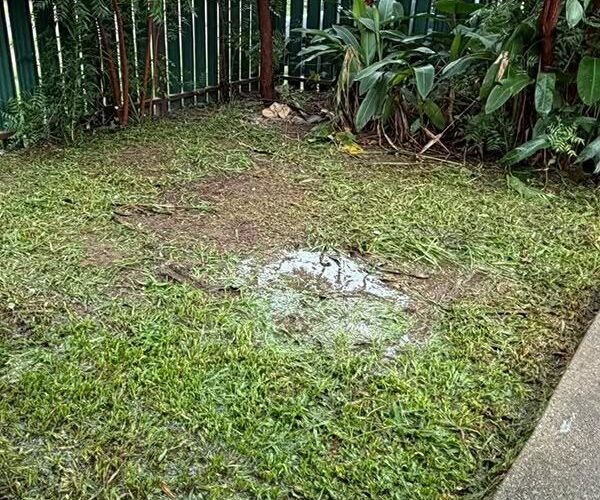
The wind drops, you open the back door, and the yard is unrecognisable. Storm damage yard cleanup starts here. Branches across the lawn, half a tree on the fence, and the trampoline somewhere it should not be.
The urge is to start dragging things into a pile immediately. Before you do, there are two things worth getting right, because both are hard to undo.
Photograph Everything Before You Touch It
If you are going to claim on insurance for storm debris removal, the evidence is what is on the ground right now.
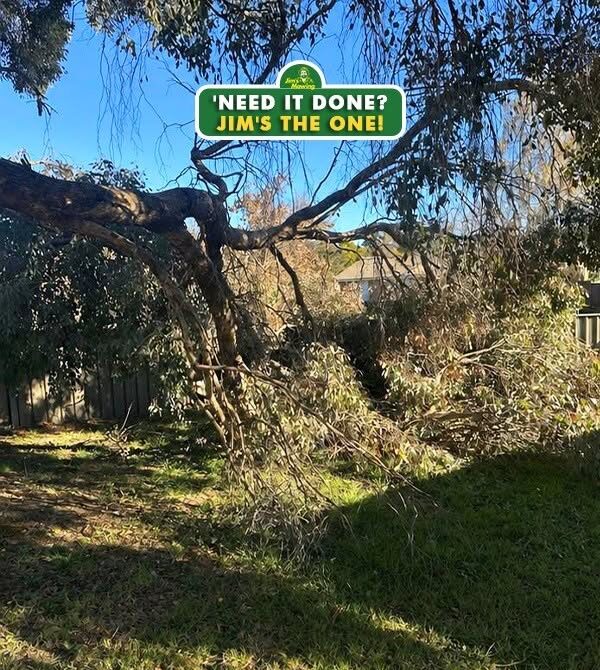
Take wide shots showing the whole scene and close shots of specific damage. Get the fence, the roof, the shed, anything crushed. Photograph the tree where it fell and what it fell on, before it becomes a neat pile of firewood.
Insurers will generally want to see the damage in place. A tidy yard and a verbal description is a much weaker position, and once it is cleared you cannot go back.
Check your policy before committing to anything as well. Storm clean-up cost cover varies considerably, and a tree down after a storm is not always covered, and some policies cover removal only where the tree has damaged an insured structure rather than simply fallen on the lawn.
Work Out What Is Actually Safe
This is the part where people get hurt, usually in the day or two after the storm rather than during it.
- Assume every fallen wire is live. Stay well back and call the electricity distributor. Do not move branches touching or near wires, at any distance you think looks fine.
- Look up before you look down. Hanging or partly broken branches still up in the canopy are the single biggest risk in a storm-damaged yard. They are called widow-makers for a reason, and they come down without warning, often days later while someone is working underneath.
- Trees under tension are dangerous. A trunk resting on a fence, bent over, or wedged against something is holding stored energy. Cutting into it releases that energy unpredictably, and the section can spring, roll or drop. This is where chainsaw injuries happen.
- Watch the footing. Saturated ground, hidden holes, and debris underfoot.
- Leaning trees and lifted root plates mean the tree is not stable, regardless of how it looks.
What Is Reasonable to Do Yourself
Small loose branches on the ground. Leaves and light debris. Anything you can pick up and carry without a ladder or a saw. Clearing drains and gutters of washed-in material, at ground level.
That is genuinely useful work and it makes the assessment easier for whoever comes next.
What Needs Someone Qualified
Anything requiring a chainsaw at height. Anything on or near power lines. Anything under tension. Anything on a roof. Large trunk sections. Trees that are leaning or partly uprooted.
This is not a soft recommendation. Chainsaw work on storm-damaged timber is genuinely specialised, and the people who do it professionally treat it with more caution than most homeowners would expect.
Within a franchise network, this gets handled by referral rather than refusal. Franchisees regularly bring in an operator with chainsaw qualifications and the right gear rather than attempting work beyond their equipment.
Storm Work Is Community Work
Something that comes through consistently from franchisees is that storm clean-up is rarely a straightforward transaction. It tends to be a street getting itself back together.
One franchisee in Orange, New South Wales, was in the middle of a garden clean-up when a windstorm came through. In the aftermath he cut trees off driveways for several neighbours without charging, and the referrals that came from it kept his diary full afterwards.
Another franchisee in Croydon, Victoria, described taking on an elderly couple’s acreage property after storm damage, where the owners simply could not manage it any more, and it turned into a full garden clean-up of the entire property.
Those are the two most common storm jobs. The urgent one, clearing access so people can get out of their driveway. And the bigger one that follows, where a property has been overwhelmed and needs putting back together properly.
Getting the Yard Usable Again
Once the hazards are gone, the rest of the storm damage yard clean-up is methodical. Debris sorted into green waste and general rubbish, because mixing them costs more at the tip. Branches cut down to a size that can be transported and taken away as green waste. Lawn assessed for damage where things have been sitting on it. Fences and structures checked. Gutters and drains cleared of what the storm put there.
If material has been sitting on the lawn for a week or more, expect yellowing underneath. Most of it recovers with light and a feed once it is uncovered.
Yard full of storm debris? Your local Jim’s Mowing team can clear what is safe and bring in the right people for what is not. Call 131 546 for a free quote or book online.