From 100-hour pub weeks in Tasmania to a healthier business and a better home life, Damian Bush’s story shows what can happen when a Jim’s Mowing franchise is treated like a real business. In his first four months, he grew from about 40 regulars to around 100, then improved profit by cutting back to the right 70 to 75 clients and tightening his schedule.
In short: Damian Bush left a high-income but punishing hospitality career and joined Jim’s Mowing in Tasmania in 2017. The first few months were hard, but once he fixed his scheduling, route density, customer mix, and cashflow habits, the business gave him a healthy income, stronger family life, and room to grow.
In this More Than Just Mowing Podcast episode, Damian Bush, a Jim’s Mowing franchisee from greater Hobart, Tasmania, who moved out of pub ownership after years of 100-hour weeks. After joining the division in 2017, using Jim’s Jobs, pen-and-paper scheduling, tighter route density, and better customer selection, he built a healthier business that now supports travel, family time, and a very good lifestyle.
A Jim’s Mowing franchise can work well for someone who wants control, income, and family time, but only if they run it with discipline. His story shows that the money came after better systems, not before.
What Did Damian Do Before Joining Jim’s Mowing In Tasmania?
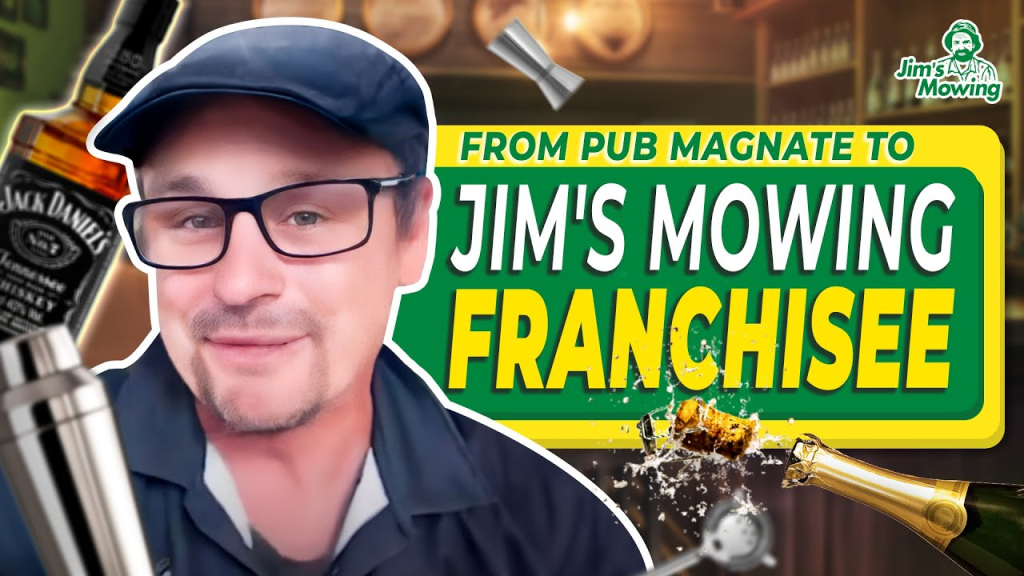
Damian did not come from gardening.
He was a concrete finisher by trade, grew up on a farm, then spent years in hospitality. He worked as a pub manager in Hobart and later became an owner in a syndicate of about 12 pubs.
The money was good. The lifestyle was not.
He says he was doing a bout 100 hours a week and had a young family with very little time left for them. Damian was not chasing a hobby. He was trying to get his life back.
Why Did Damian Choose A Jim’s Mowing Franchise Over Hospitality?
He wanted out of hospitality, but he did not want to jump into an unknown brand.
That is where Jim’s mattered. Damian had friends already running successful Jim’s Mowing businesses in Tasmania, and he kept seeing the brand around him. In his mind, Jim’s was the category leader.
That brand trust still matters for prospects looking into owning a franchise with Jim’s Group. Damian’s view was simple: if customers want a home service provider, they want a trusted name.
He also did practical research. He looked online, spoke to mates in the system, and weighed up reputation. For him, the decision was not about ego. It was about finding a proven business that could replace a draining career with something more sustainable.
What Happened In Damian’s First Few Months With Jim’s Mowing?
The first few months were rough.
He started in August, went straight into the spring rush, and was seven days a week on the tools. He says he was about 25 kilos heavier when he began and found the early physical transition hard.
That matters because too many franchise stories skip the uncomfortable bit. Damian does not. He is clear that the beginning was demanding and that he made mistakes.
The biggest one was saying yes to too much work in too many areas.
He started with about 40 regular customers from a split. Within four months, he had pushed that to roughly 100 regulars. On paper, that looked like growth. In practice, it created long drives, poor route density, bad-fit clients, and weak margins.
Once he reviewed the list properly, he cut back to about 70 to 75 regulars. That was the turning point.
How Much Can You Earn With A Jim’s Mowing Franchise?
Damian says a solo business with one crew can deliver a very healthy income and a very good lifestyle. He also says the income has been strong enough to support travel for the family.
That makes this a credibility story, not a chest-beating one.
If you want a broader brand-level view of how much you can earn with a Jim’s franchise, that is worth reading alongside Damian’s story. His case shows the more important truth: revenue means very little if the route is poor and the schedule is messy.
How Did Damian Grow His Business In Greater Hobart?
Growth did not come from taking every lead forever.
It came from getting selective.
In greater Hobart and the surrounding Tasmania market, Damian shaped the business around profitable work. That included regular commercial-style jobs, acreage mowing, block clearing, fire reduction work, top-end garden maintenance, and repeat work for property-related clients.
He also learned to pass on the wrong jobs instead of forcing them into the run.
That point is bigger than it sounds. Early on, he thought more customers automatically meant more money. Later, he realised that poor-paying jobs, difficult access, and long travel times can quietly wreck a mowing business.
He also built capacity over time. He had a full-time employee, another employee previously, and casual support at one stage. Now he still benefits from trusted subcontract help. That flexibility matters because it lets the owner stay involved in growth without carrying every hour personally.
What Systems And Tools Made The Biggest Difference In Damian’s Business?
The biggest advantage in Damian’s story is not one shiny app. It is system discipline.
He uses Jim’s Jobs, printed schedules, pen and paper notes, night-before prep, and a separate tax account. Simple tools. High impact.
If you are weighing up franchisee training or looking into starting a Jim’s Mowing franchise, this is the part worth paying attention to.
How Route Density Protects Margin In A Mowing Run
Damian’s best operational lesson is route density.
He explains it plainly: work suburb by suburb, start with the furthest-out job, and work your way back home. That reduces dead travel, fuel burn, idle time, and mental clutter.
Here is why that matters. A business can look busy and still be unprofitable. If you spend two hours driving between jobs, your quoted rate starts leaking before you even touch the mower.
Damian only saw clear profit once he stopped treating every lead as a good lead and started building a tighter run.
Why Customer Selection Matters As Much As Lead Volume
Not every regular is a good regular.
After hitting about 100 regulars in four months, Damian and a fellow franchisee reviewed the list and cut out poor fits. That meant poor payers, bad yards, weak access, and jobs that did not suit the business.
Within a week, the business looked healthier.
That is a strong lesson for any prospect reading about how franchising fees work. The issue is not just what you pay into a system. The issue is whether you know how to turn leads into the right book of work.
Why A Tax System Beats A Better Ute
Damian is blunt about cash flow.
He says one of his biggest mistakes was wanting the best gear too early. His first equipment spend was about $4,800, and he now says he could have set up for half that or less. Later, instead of buying a new $90,000 vehicle, he bought a pre-owned Hilux and saved about $40,000.
More importantly, he says new operators should move 25% of their income aside for tax into a separate account and not touch it.
That is not glamorous advice. It is profitable advice.
How Social Media Became A Local Lead Source In Tasmania
Damian also treats social media like a simple local proof engine.
He says posting photos every few days from the couch while watching telly helped bring in about $10,000 worth of work over six months. The point was not follower count. The point was local reach, shares, and direct messages.
For a Jim’s Mowing franchise in Tasmania, that makes sense. Customers want to see the actual work, the actual operator, and the actual result.
What Challenges Did Damian Face And Overcome?
The biggest early challenges were physical strain, scheduling chaos, cashflow management, and mental load.
He says the first six months were especially hard because he was unfit, too busy, and trying to do everything at once. That combination left him under pressure.
He got through it by simplifying.
He improved scheduling. He reduced bad-fit work. He learned to say no. He put systems in place for tax, equipment prep, and weekly planning. He also connected more closely with franchisor support and other franchisees.
Damian later became involved in helping screen and support new franchisees in Tasmania because he had already seen what happens when people start without enough structure.
Is A Jim’s Mowing Franchise Worth It For Owner-Operators?
Based on Damian Bush’s story, yes, but only if you treat it as a disciplined small business.
This is not a magic-income article. It is a practical one. Damian left a career that paid well because the lifestyle was poor. In Jim’s Mowing, he found a healthier balance, but only after fixing his run, tightening his systems, and thinking properly about margin.
The result is not just financial.
He now coaches football, helps manage his sons’ hockey commitments, travels, and has more control over his week in Tasmania. That is the real transformation here.
How Does A Standard Operator Compare With A Jim’s Mowing Professional?
| Feature | Standard Operator | Jim’s Professional |
| Training | Often self-taught or pieced together | Structured onboarding plus support from franchisor and fellow franchisees |
| Leads | Must build demand alone | Can use brand leads, referrals, and self-marketing together |
| Systems | Depends entirely on the owner’s habits | Jim’s Jobs, proven scheduling habits, and network support |
| Branding | Unknown trust level for customers | Nationally recognised Jim’s brand |
| Income Consistency | Can swing badly with poor planning | Stronger when paired with repeat work, route density, and better systems |
“It allowed us to have a very, very healthy income and a very good lifestyle.”
— Damian Bush, Jim’s Mowing franchisee, Tasmania
Frequently Asked Questions
A solo operator with one crew can produce a very healthy income and support travel and a good lifestyle.
Damian’s first year was tough physically and operationally. He started in the spring rush, worked long days, made scheduling mistakes, then improved profit once he tightened his customer list and route density.
He started with about 40 regulars from a split. Within four months, he had around 100, then cut the book back to roughly 70 to 75 regulars to make the run more manageable and more profitable.
Damian’s advice is not to overbuy. He says you need a solid commercial mower, basic attachments, a blower, and spray gear, and that many new operators spend too much too early.
Damian describes initial training in Melbourne, ongoing help from his franchisor, and support from other franchisees. He later helped with prospect shadowing and vetting in Tasmania because hands-on support can stop people from starting the wrong way.
Yes, in Damian’s case, it did. He says simple local posting helped bring in roughly $10,000 worth of work over six months, mainly because local people saw the work, shared it, and messaged directly.
Damian’s story says it can be, but not instantly. He only got the lifestyle benefits after sorting out his systems, pricing, customer mix, and schedule.
Key Takeaways
- Damian Bush left a 100-hour hospitality career for a Jim’s Mowing franchise in Tasmania.
- His first four months grew from about 40 regulars to 100, but profit improved only after he cut back to the right 70 to 75 clients.
- Route density, better customer selection, and cashflow discipline mattered more than chasing every lead.
- He says the business now delivers a very healthy income and a much better lifestyle.
- The story is strongest not because of one big number, but because it shows a credible shift from burnout to control.
Ready To Take The Next Step?
Book Trusted Local Lawn And Garden Care
If you want a local operator who works to professional standards, shows up properly, and is backed by the Jim’s brand, that is the value proposition here. Jim’s Mowing also promotes insured operators and a Jim’s work guarantee through its official service pages.
Request your free quote from Jim’s Mowing today.
Build Your Own Jim’s Mowing Business
Damian Bush’s story is a strong example of what a Jim’s Mowing franchise can look like when the owner gets serious about systems, customer quality, and margin.
Learn more about joining Jim’s Mowing at jims.net or call 131 546 today.