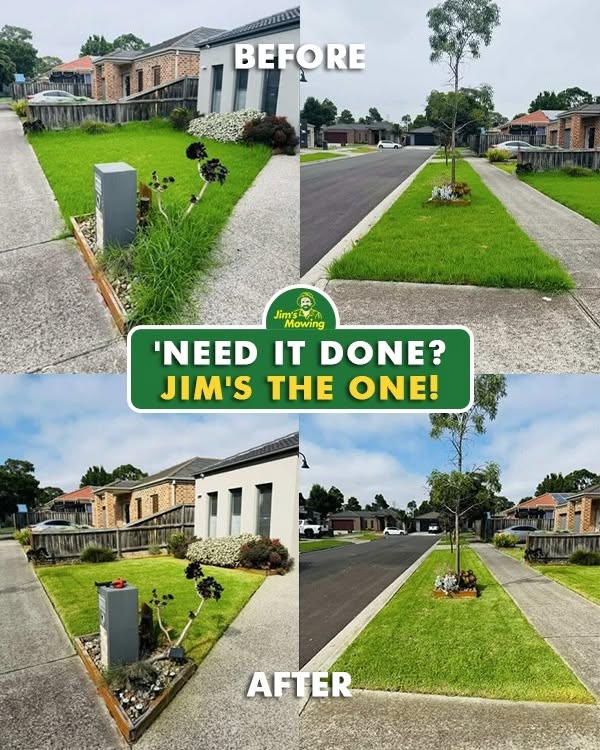
If your driveway has slowly faded into a green-grey patchwork of mould and grime, you’re not the only one. Australian concrete, brickwork and pavers cop a lot. Sun, mossy shade, leaf litter, oil drips from the car, and a bit of rain to keep the mould happy. A good pressure clean can turn a tired path back into something that looks brand new in a couple of hours. Here’s how to know when it’s worth doing, what tools and treatments actually work, and when calling a pro will save you more than you’d think.
When to pressure wash (and when to skip it)
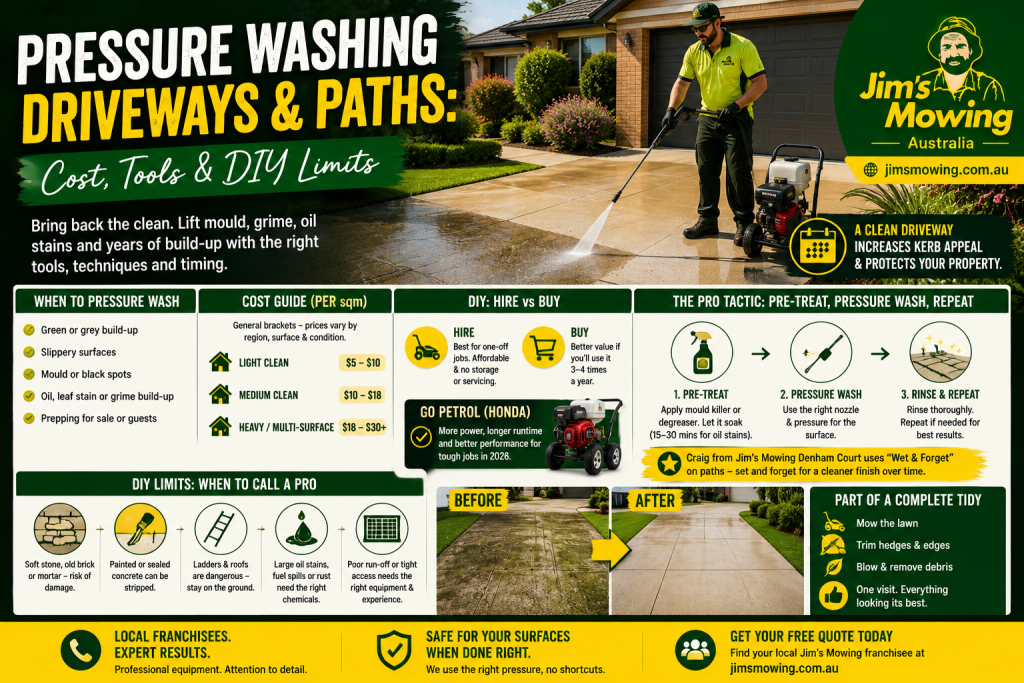
Pressure washing is one of those jobs you only really notice when it’s overdue. Tell-tale signs it’s time:
- The driveway, path or patio has gone a darker shade of green or grey
- Pavers feel slippery in wet weather, especially in shaded spots
- Black spots of mould have started spreading across the surface
- Pollen, leaf stain or oil drips have built up over a season
- You’re prepping the house for sale, an open inspection, or guests
The flip side is also true. Pressure washing isn’t a magic fix. If your concrete is genuinely cracked, sealed badly, or has stains that have soaked in for years, you’ll lift the surface dirt but the deeper marks will stay. And on older mortar or sandstone, too much pressure can cause real damage.
The rough rule: pressure wash when the surface is good but the look is bad. If the surface itself is in trouble, you’re looking at restoration, not cleaning.
Cost per square metre: general bracket guidance
Pricing varies a lot by region, surface type, level of staining, and access. As a rough industry guide for Australia in 2026:
- Light clean of a small driveway or path (under 50sqm): typically in the range of a few hundred dollars as a flat call-out
- Medium driveway, garage path and front entry combined: generally in the mid hundreds
- Large area, multi-surface, heavy mould or oil staining: can stretch into four figures depending on prep work needed
The cheaper end is a quick wash-down with a domestic-grade rig. The higher end usually includes pre-treatment with a mould killer, two passes, and a final clean down of the surrounds.
Always get a quote on the job rather than going by an average. Two driveways that look the same to you can be wildly different to clean depending on what they’re made of and how thick the build-up is.
DIY: hire vs buy
If you’re doing a one-off clean, a hire unit from a tool yard is the easier call. A domestic petrol pressure washer for the day usually costs less than a meal out. You don’t store it, you don’t service it, you give it back.
If you’ve got a big property and you reckon you’ll use it three or four times a year, buying makes sense. The two questions to ask:
- Petrol or battery? Honda-engine petrol units still beat battery for serious work in 2026. They run longer, push more pressure, and don’t drop off as the tank empties.
- Pressure (PSI) and flow (LPM)? Higher PSI cleans harder. Higher LPM rinses faster. Most domestic units sit around 2,500 to 3,000 PSI, which is plenty for driveways, paths and patios.
A franchisee on the Jim’s Mowing podcast confirmed the petrol Honda preference: a Honda-engine petrol pressure washer is what made the cut when he expanded his service list. The battery-powered units have improved, but for a long driveway and a dirty patio set, petrol is still the safer buy.
The pro tactic: pre-treat, pressure wash, repeat
Anyone can blast water at concrete. The trick to actually getting it clean is the prep.
Craig, who runs Jim’s Mowing Denham Court in Sydney, has built a monthly upsell around this exact tactic with his regular customers.
“This time of year, I normally put the wet and forget on the pathways and hose it down and I just charge him.”
— Craig, Jim’s Mowing Denham Court, on the Jim’s Mowing podcast
“Wet and Forget” is a soft chemical treatment that goes down on paths and slowly breaks down mould, mildew and lichen over the weeks that follow. It’s not a fast solution, it’s a steady one. Apply, let the rain do the work over a fortnight or so, and the next time you walk past, the surface is visibly cleaner without you needing to lift a finger. For a heavy clean, you pre-treat the day before, then pressure wash for a noticeably easier and more thorough job.
The same principle applies to oil stains. A degreaser left to soak for 15 to 30 minutes, then pressure washed off, will lift far more than a straight blast of water.
DIY limits: when to call a pro
Pressure washing looks easy on YouTube. In practice, there are a few jobs where DIY goes wrong fast:
- Sandstone, soft brick or old mortar. Too much pressure and you’ll erode the surface. Pros use lower-pressure surface cleaners designed for the material.
- Painted or sealed concrete. A high-pressure jet will strip the coating. You need to step the pressure down and use a wide fan.
- Working from a ladder or roofline. Don’t. Stay on the ground. If you’re tempted to climb to reach gutters or render, it’s a pro job.
- Large oil stains, fuel spills or rust deposits. These need targeted chemistry, not just water.
- Tight access driveways with no run-off. Where does the wash water go? A pro carries gear that captures or directs it. DIY-ing in a sloped street with stormwater grates is messy.
If your driveway is bigger than a couple of hundred square metres, or it’s been left for a long time, calling in a pro pays for itself in time, mess and finish.
Pressure cleaning as part of a wider tidy
The other thing worth thinking about: pressure washing the driveway makes the rest of the yard look worse if it’s tired. Sharp, clean concrete next to overgrown hedges and a patchy lawn just draws attention to the patchy lawn.
Most of our franchisees see pressure cleaning as part of a wider tidy, especially heading into winter mowing season when the lawn isn’t growing fast and the focus shifts to the hardscape. It’s also a popular add-on for customers on a lawn care subscription where the mowing visits are baked in and the path clean gets quoted as a quarterly extra.
The good news is that Jim’s has you covered for both. The Jim’s lawn mowing service handles the lawn and edges, and our sister division Jim’s Window and Pressure Cleaning handles the driveways, paths, exterior walls and windows. Michael, a franchisee who runs both divisions, has built his recurring revenue by selling clients on the package: mow, edge, blow down hard surfaces, and a quarterly pressure clean. The lawn customer becomes a pressure cleaning customer, and back again.
Frequency: how often to pressure wash
Once a year is plenty for most driveways and paths. If you’re in a shaded, leafy spot, or you’ve got a pool deck that gets wet often, twice a year is more realistic.
A few habits that stretch the time between cleans:
- Sweep regularly to keep leaf litter from staining the concrete
- Treat early mould patches with “Wet and Forget” before they spread
- Hose down any oil drips from the car as soon as you spot them
- Trim back overhanging trees to let sun and air dry out the shaded spots
So, should you DIY or call Jim’s?
For a small front path on a sunny street, DIY with a hired unit is fine. For a long driveway, a patio set, or any surface that’s been neglected for years, the pro option is usually the right call. The finish is better, the prep is done properly, and you don’t end up regretting the rented unit halfway through a 35-degree afternoon.
Prefer to skip the DIY? Your local Jim’s franchisee will get the lawn, edges and surrounds sorted properly, and if you need the driveway pressure cleaned at the same time, we can book that in through Jim’s Window and Pressure Cleaning. Get a free quote from the Jim’s lawn mowing service on 131 546 or book online to find your nearest Jim’s.