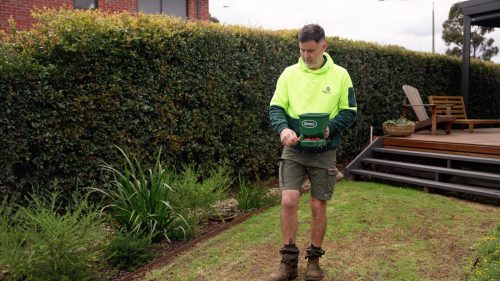
Anthony Silverman joined Jim’s Mowing after 18 years at Telecom, bought his franchise in 1992, and then bought his region in 1995. Nearly 32 years later, he has grown that operation from 13 franchisees to 85 in the Casey region of Melbourne, while repeatedly pointing to the same drivers: open systems, flat fees, strong communication, and lifestyle value.
In short: Anthony Silverman left Telecom, bought a Jim’s Mowing franchise in 1992, and then bought his region in 1995. He says the model worked because Jim’s was open about how work was allocated, did not take a percentage of every job, and gave franchisees both support and room to grow. Today, Anthony oversees 85 franchisees in a compact Melbourne region.
In this More Than Just Mowing Podcast episode, Anthony Silverman explained how he moved from an 18-year Telecom career into Jim’s Mowing in Berwick, then built his Casey region operation from 13 franchisees in 1995 to 85 today. He credits the system’s flat-fee structure, one-off lead fee, open lead allocation, and hands-on support for helping operators build both income and lifestyle.
Jim’s Mowing is a low-risk, system-led way to build a local service business. The hard proof here is not a hype claim. It is Anthony’s 32-year track record, his growth from franchisee to regional franchisor, and the fact that his area grew to 85 franchisees. This article breaks down exactly what made that possible.
What Did Anthony Do Before Joining Jim’s Mowing?

Anthony spent 18 years with Telecom before deciding it was time to do something different. He did not come into Jim’s from lawn care. He came from a stable job and was simply looking for a better next move.
That matters because it reflects a common search intent around the Jim’s Mowing franchise: do you need industry experience first? In Anthony’s case, the answer was no. His move was career-based, not trade-based.
Why Did He Choose A Jim’s Mowing Franchise?
Anthony looked at both VIP and Jim’s before deciding. He chose Jim’s because Jim Penman was open about how the system worked. Anthony could literally see calls coming in and being allocated. That transparency set Jim’s apart in his view.
He also makes it clear that trust in the system matters. If you are weighing up whether to own a franchise, this story shows one practical reason people choose Jim’s over going alone: visibility into how the work actually flows. Anthony saw the mechanics before he bought.
Friends and family told him he had missed the boat because Jim’s had already been going for three years. He ignored that advice, bought in anyway, and proved that demand was still there.
What Happened In Anthony’s First Two And A Half Years?
Anthony said he went out, mowed lawns, and it went really well. He did that for about two and a half years before being asked to come into the office and discuss buying the region.
That early progression matters. It suggests two things. First, he was performing strongly enough as an operator to be noticed. Second, the Jim’s model created a pathway from doing the work to leading a larger territory.
In 1995, he bought the region. At that point, there were 13 franchisees, including him.
How Much Can You Earn With A Jim’s Mowing Franchise?
Anthony built enough value to move from one franchise into regional ownership, and he now oversees 85 franchisees in a compact Melbourne area. He also says franchisees often come in for lifestyle reasons, then find that “the money takes care of itself” when the business is run well.
If you want a broader Jim’s Group income explainer, the current how much you can earn with a Jim’s franchise page is the right internal resource. Anthony’s interview adds the practical layer: income strength follows territory management, communication, service quality, and repeat work.
How Did Anthony’s Business Grow Over Time?
Anthony’s original region was huge. It stretched from Hallam to the New South Wales border and included Phillip Island and the Mornington Peninsula. Over time, he sold off parts of it, swapped other parts, and made the territory more compact.
That was not contraction. It was smarter growth. Today, he says the remaining area runs from Springvale through to Tynong and down to Lang Lang, with 85 franchisees in a tighter operating zone.
Why A Compact Run Matters More Than A Bigger Map
If a franchisee has 100 clients spread across a wide area, compacting that run to half the size and dropping back to 70 clients can still be a better move. The time saved on travel gives the operator room to rebuild to 100 clients more efficiently.
Revenue is not just about client count. It is also about density, travel time, and how many productive hours stay inside the day.
What Systems And Tools Made The Biggest Difference?
The real system advantage he describes is the Jim’s operating model itself.
How The Flat-Fee Model Changes The Economics
Anthony directly says Jim’s has never taken a percentage of each job. Instead, franchisees pay a flat fee and a lead fee for new jobs, and that lead fee is paid once per client, not every time the same customer books again.
That changes the economics in a meaningful way. A franchisee is not giving away a slice of every repeat job forever. Once the client is won, the operator keeps the ongoing value of that relationship, subject to the flat-fee model. Anthony specifically says this is one of the biggest misconceptions people have about Jim’s.
If you want the broader Jim’s Group explanation of that model, the internal page on how franchising fees work is the cleanest companion resource.
How Territory Allocation Protects Demand Without Wasting Leads
Anthony also explains that territory does not mean jobs are left to die. If a franchisee is not taking work because they are already busy, jobs in that territory can still be allocated elsewhere. His point is simple: the system should not force staff to tell customers no just because one operator is full.
That makes the model more flexible than many people expect. It protects the customer experience, keeps demand moving, and avoids losing good leads. It also explains why Anthony pushes operators to think commercially, not just territorially.
What Training And Support Look Like In Practice
Anthony describes the process clearly. He calls prospects, sends upfront information, meets them face to face, answers questions honestly, includes partners or family where needed, and then sends prospects on an observation day with a franchisee.
He also talks about ongoing support after entry: business coaching, mentoring, horticultural training, safety requirements for higher-risk work, and practical help to grow or compact a run. That lines up with Jim’s current franchisee training resources.
What Challenges Did He Face And Overcome?
One challenge was sheer geography. Anthony’s region used to be so large that servicing it properly became inefficient. He solved that by reshaping the area over time instead of pretending bigger was always better.
Another challenge was misconception. Anthony says many prospects wrongly assume Jim’s takes a percentage of every job, or that an existing operator in a suburb means there is no room left. He spends a lot of time correcting both ideas.
He also stresses selection. In his view, lawn care skills can be taught, but poor attitude and weak communication create complaints. That is why he looks hard at personality, fit, and whether the person can work well with clients.
Is A Jim’s Mowing Franchise Worth It?
Based on Anthony’s direct evidence, yes, but not because it is passive or easy. It is worth it if the operator values service, communicates well, and uses the system properly.
Anthony’s strongest proof point is not a slogan. It is longevity. He joined in 1992, bought the region in 1995, and now runs a compact region with 85 franchisees. He also says several franchisees under him have gone on to buy regional franchises themselves.
His most human proof point is lifestyle. He says many operators join for family reasons, and later thank him because they got to be present for their kids. He also gives the example of a franchisee funding a five-week European holiday through the business.
How A Jim’s Mowing Franchise Compares To Going It Alone
| Feature | Standard Operator | Jim’s Professional |
| Training | Learns by trial and error | Gets upfront guidance, observation day, mentoring, and optional skills development |
| Leads | Must generate all work alone | Receives branded enquiries and lead allocation through the Jim’s system |
| Systems | Builds quoting and workflow from scratch | Uses established fee, lead, territory, complaint, and support systems |
| Branding | Must create trust from zero | Trades under a nationally recognised Jim’s name |
| Income Consistency | Depends fully on self-generated demand | Supported by repeat clients, system-generated leads, and tighter territory management |
“The opportunities in Jim’s are not only to make really good money, but to get to a point where they can make the money they want and still get the lifestyle and the time.”
— Anthony Silverman, Jim’s Mowing regional franchisor, Casey region, Melbourne
Frequently Asked Questions
No. Anthony says Jim’s does not take a percentage of each job. He says franchisees pay a flat fee and a once-off lead fee for a new client.
Anthony explains that the franchisee taking work in that territory gets first access to the services they provide. If they are too busy and not taking work, the job can still be allocated elsewhere, so the customer is not lost.
Anthony’s own story suggests yes. He came from Telecom, not mowing, and says attitude and people skills matter more than prior mowing experience because the practical work can be taught.
Anthony describes phone calls, upfront written information, home meetings, observation days, mentoring, optional training, and ongoing franchisor support after joining.
Anthony says yes. He specifically pushes back on the idea that one visible operator in a suburb means there is no room left. His own Casey region grew from 13 franchisees in 1995 to 85 now.
Anthony says the best ones are strong communicators. They write down the scope, confirm pricing, keep clients informed, and make sure expectations are clear before the work starts.
Very important. Anthony says lifestyle is one of the main reasons people join, and he gives examples of operators getting more family time and funding major holidays through the business.
Key Takeaways
- Anthony Silverman moved from 18 years in Telecom into a Jim’s Mowing franchise in 1992.
- He bought his region in 1995 and grew it from 13 franchisees to 85.
- Jim’s clearest system advantage is flat fees, one-off lead fees, and flexible territory allocation, not percentage-based royalties.
- Anthony sees communication, reliability, and compact territory management as major drivers of repeat work and a better lifestyle.
- This is a strong case for Jim’s Group as a structured alternative to going independent, especially in a demand-heavy metro area like Melbourne’s Casey region.
How To Take The Next Step With Jim’s Mowing
Need Reliable Outdoor Services Backed By A National Brand?
If you want outdoor work done by a professional local operator, the Jim’s model Anthony describes is built around clear communication, service standards, and a formal support process behind the person doing the work. That matters whether you need mowing, gardening, hedging, rubbish removal, or gutter cleaning in areas like Berwick, Casey, and the wider Melbourne suburbs.
For customers, the value is simple: you are not hiring a random solo operator with no backup. You are hiring someone backed by the Jim’s system, brand, and complaint resolution process. Anthony says that if something goes wrong, there is a real escalation path that independents often do not have.
Request your free quote from Jim’s Mowing today.
Thinking About Starting A Jim’s Mowing Franchise?
Anthony Silverman’s story is a practical reminder that a Jim’s Mowing franchise is not just about mowing lawns. It can become a long-term business with support, local demand, room to grow, and a pathway into broader leadership if you execute well.
Learn more about joining Jim’s Mowing at jims.net or call 131 546 today.