Dollar Spot Lawn Disease: Signs, Causes and Treatment
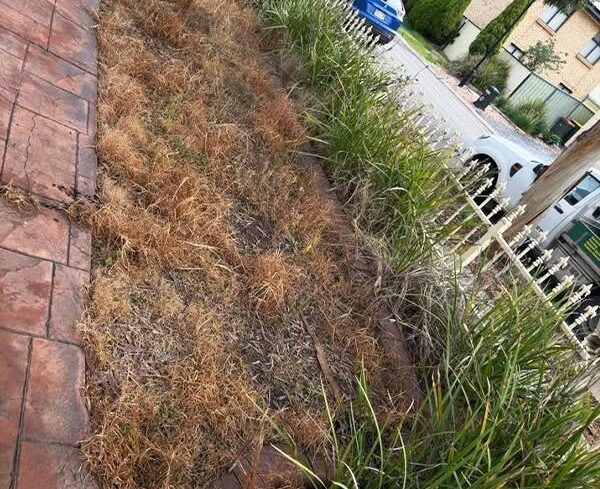
Small round patches, roughly the size of a coin, straw or bleached-tan in colour, scattered across the lawn.
Left alone for a week or two they start joining up into larger irregular areas, and at that point people usually stop assuming it is just a dry patch.
That is dollar spot lawn disease, and it is one of the more common fungal problems in Australian lawns.
How to Identify Dollar Spot
- Size and shape. The lawn fungus circles are typically 25 to 65 millimetres across, roughly circular and slightly sunken compared with the grass around them. The name comes from the coin-sized appearance.
- Colour. Straw, tan or bleached. Not dark brown, and not the grey of drought stress.
- The blade itself. This is the confirming detail. Look closely at an individual grass blade in an affected area. Dollar spot produces a lesion that runs across the width of the blade, often light-coloured in the centre with a darker reddish or brown border. On coarser grasses the marking may cover only part of the blade.
- Early morning webbing. In humid conditions you may see fine white cobweb-like growth across affected areas at dawn. It disappears once the dew burns off, so you have to be out early to catch it.
Feel. Affected blades can feel slightly greasy or slimy to the touch.
What Causes Dollar Spot
Dollar spot is driven by a specific combination, and once you know the combination the treatment makes sense.
- Extended leaf wetness. The fungus needs the grass surface to stay wet for long periods. Heavy dew, evening watering and poor airflow all contribute.
- Warm days, cool nights. That day-to-night swing produces heavy dew, which is exactly what the fungus wants. It is why dollar spot often shows up in spring and autumn rather than the peak of summer.
- Low nitrogen. This one surprises people. Dollar spot is notably worse in underfed lawns. A lawn that is short on nitrogen grows slowly and cannot outgrow the damage.
Thatch and compaction. Both hold moisture at the base of the plant and reduce airflow.
How to Treat Dollar Spot
Feed the Lawn
The most effective dollar spot treatment starts here, because low nitrogen is a genuine driver, a balanced fertiliser application often visibly reduces dollar spot on its own. This is one of the few lawn diseases where feeding is part of the cure rather than something to avoid.
Change Your Watering
Water early in the morning, deeply and less often. Morning watering means the leaf dries through the day. Evening watering leaves the lawn wet all night, which is the single best thing you can do for the fungus.
- Improve airflow and drainage. Reduce shade where practical, address compaction, and deal with areas that stay damp.
- Manage thatch. A heavy thatch layer holds moisture right where the fungus lives. If thatch is more than about a centimetre thick, dethatching helps considerably.
- Mow sensibly. Do not scalp the lawn, because stressed grass is more susceptible. Mow affected areas last, and clean the mower afterwards rather than driving spores across the rest of the lawn.
Fungicide if It Is Spreading
If the patches are joining up and cultural changes have not held it, an appropriate fungicide will stop the spread. Follow label rates, and treat it as one part of the fix rather than the whole fix, because if the underlying conditions do not change it will return.
What Not to Do
Do not water more in response to the browning. It looks like drought and the instinct is understandable, but extra water is exactly what dollar spot needs.
Do not apply heavy nitrogen all at once as a panic response either. Balanced feeding helps. A sudden flush of soft growth does not.
And do not assume it will simply grow out. Mild cases often do once conditions change. Established cases that have started joining up usually will not without intervention.
What Dollar Spot Is Confused With
Two things get mistaken for dollar spot regularly.
The first is drought stress, which also produces pale patches. The difference is the edges. Drought damage fades gradually into healthy grass and shows up worst in the driest, most exposed parts of the lawn. Dollar spot produces defined circular spots that can appear anywhere, including in areas that are well watered.
The second is grub damage. That one is settled with the tug test. Pull gently on the grass in an affected patch. If it lifts away with no root resistance, something has eaten the roots and you are dealing with insects rather than fungus.
Getting the Diagnosis Right
Dollar spot is one of several lawn diseases that look similar at a glance, and treating for the wrong one wastes both money and time while the lawn keeps declining.
The good news is that it responds well once correctly identified, and a lot of the fix is cultural rather than chemical. Feeding, watering timing and airflow do most of the work.
Seeing small straw-coloured circles spreading across your lawn? Your local Jim’s Mowing team can confirm what it is and treat it properly. Call 131 546 for a free quote or book online.