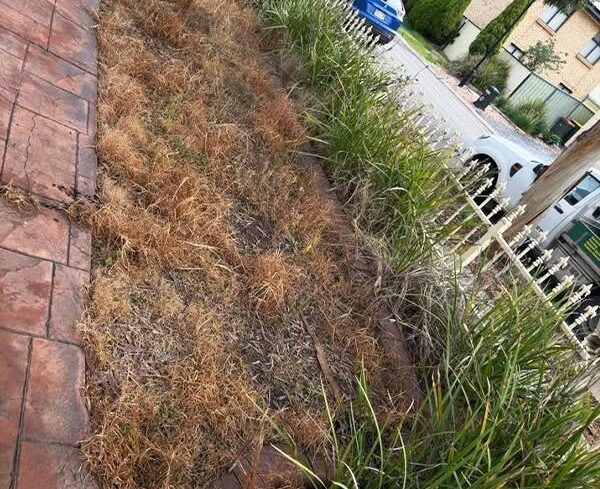
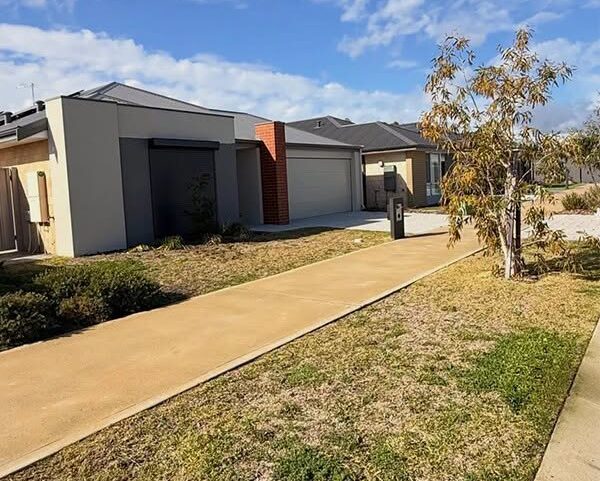
“Lawn grub” gets used as a catch-all for anything chewing up a lawn, which makes lawn grub identification harder than it needs to be. The trouble is that it covers at least three very different insects, and they do not damage grass the same way or respond to the same timing.
If you are standing on the back step wondering what is eating your lawn, working out which one you have changes what you do and, more importantly, when you do it.
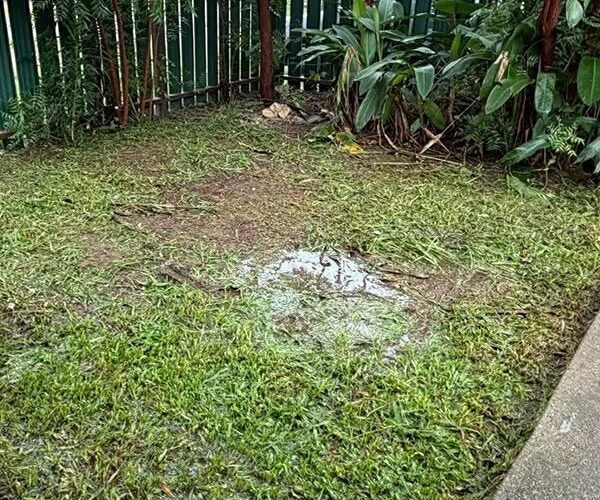
Start with Where the Damage Is
The first question is not what the insect looks like. It is whether the damage is above ground or below it.
Roots eaten, grass lifts away like loose carpet. That is a root feeder, most likely curl grubs.
Leaves eaten, grass still firmly anchored. That is a leaf feeder, most likely army worms or sod webworm.
Do the tug test. Take a handful of grass in the damaged area and pull upwards. If it comes away with no resistance and bare soil underneath, the roots are gone. If it holds firm but the blades are chewed down, the roots are fine and something is grazing the top.
That single test splits the problem in half.
Curl Grubs
- What they are. The larvae of various beetles, including African black beetle and several cockchafer species. Our lawn insect guide has more on which beetles cause what. Creamy white, fat, and curled into a distinctive C shape. Usually 15 to 25 millimetres long with a brown head and visible legs near the front.
- Where to find them. Curl grubs in lawn areas sit just under the surface. Dig or peel back a section of turf at the edge of a damaged patch, about 100 millimetres square. If there are several grubs in that small area, you have your answer.
- The damage. They eat roots. The lawn yellows, then browns, then lifts. Because the symptoms look exactly like drought stress, people usually water more, which achieves nothing because there are no roots to take it up.
- Timing. Treat while the grubs are small and actively feeding, generally from spring into early summer. Large, mature grubs are much harder to kill and are close to finishing their damage anyway.
Army Worms
- What they are. Caterpillars, the larvae of a moth. Green, brown or almost black, with stripes running the length of the body. They can reach around 40 millimetres.
- Where to find them. They feed at night and hide during the day, so daytime digging often turns up nothing. Two ways to check. Go out after dark with a torch and look at the grass surface. Or use the soapy water test, mixing dish soap into a bucket of water and pouring it over a square metre of affected lawn, which irritates them into coming to the surface within a few minutes.
- The damage. Army worm lawn damage happens fast, because they eat leaves. Army worms move as a group, which is where the name comes from, and a lawn can go from fine to badly scalped in a couple of days. The edge of the damaged area often looks like a distinct advancing front.
- Timing. Late summer into autumn is the classic window, and we cover treatment in detail in how to get rid of army worms, and they can appear again after warm humid weather. Speed matters more than with curl grubs, because the damage happens in days.
Sod Webworm
- What they are. Also moth larvae, smaller than army worms, usually greenish-grey with dark spots.
- Where to find them. They build small silk-lined tunnels down in the thatch layer. Look for fine webbing at the base of the grass early in the morning, and small green pellets of frass sitting in the thatch.
- The damage. Ragged, chewed patches that thin out rather than disappearing completely. Often less dramatic than army worms but more persistent.
- Timing. Warm months, and repeat generations through the season are common.
Signs that Apply to All Three
- Birds. Sudden intense interest from magpies, ibis or plovers, particularly birds tearing at the turf rather than walking across it, means there is protein under there. Birds are the earliest warning most people get.
- Sudden decline. Damage over days rather than weeks points to insects rather than disease or drought.
- Damage that keeps expanding despite watering and feeding.
Treating Each One
The active ingredient and the timing both matter, and they differ.
Root feeders need the product to reach the root zone, which usually means watering it in after application. Leaf feeders need it to stay on the leaf surface, which usually means not watering it in. Applying the right product the wrong way is a common and expensive mistake.
Repair matters too, and it differs. A lawn chewed at leaf level will often recover on its own once the insects are gone, given feeding and water. A lawn whose roots have been eaten will not. That grass is dead and the area needs repairing or re-turfing.
Why Timing Decides the Result
The recurring theme with all three is that timing decides the result. Treat curl grubs too late and you are killing grubs that have already done the damage. Treat army worms too slowly and you lose the lawn in the meantime.
That is easier when someone is on the property regularly and notices the early signs rather than the finished damage.
Something eating your lawn? Your local Jim’s Mowing team can identify what it is, treat it at the right stage and repair what is left behind. Call 131 546 for a free quote or book online.