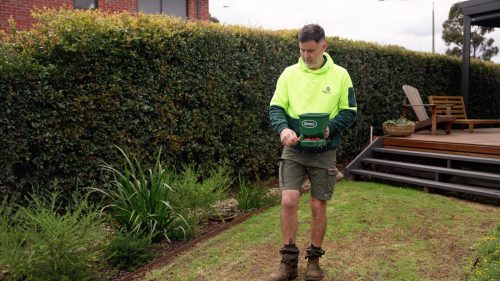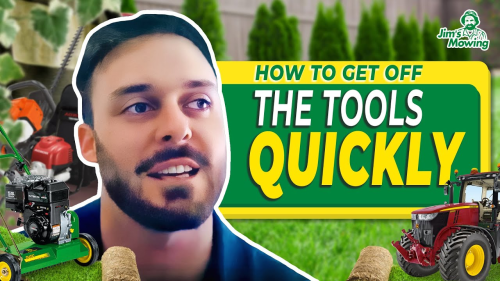
Former teacher Adam Woolley says he made back his upfront investment in month one, built a team in under a year, and is now projecting about $500,000 in annual turnover. His story is not about luck. It is about pricing discipline, targeted mowing work, strong training, and building a business instead of staying trapped in a job.
In short: Adam Woolley left teaching, joined Jim’s Mowing, and recovered his initial investment in his first month. Within about 10 months, he had multiple staff, one admin, and a business tracking at roughly half a million dollars a year. His edge came from targeted mowing leads, strong pricing, daily staff coaching, and treating customer service like a growth system.
In this More Than Just Mowing Podcast episode, Adam Woolley, a Jim’s Mowing franchisee who moved from teaching into business ownership, recovered his investment in month one, and says the business is now tracking to roughly $500,000 a year. He credits Jim’s Mowing training, advice from successful franchisees, disciplined pricing, and a system built around recurring mowing work rather than cheap, scattered jobs.
A Jim’s Mowing franchise can scale quickly when the operator treats it like a business. Adam Woolley did not just mow lawns. He tightened pricing, targeted the right work, trained staff hard, and moved himself into sales and quality control. This article breaks down exactly how he did it.
Why Did Adam Leave Teaching For A Jim’s Mowing Franchise?
Before Jim’s Mowing, Adam Woolley was a teacher. He taught for about three and a half years, including casual work on the Gold Coast and leadership work in a school up in the Gulf of Carpentaria.
The problem was not the lifestyle on paper. He had school holidays and regular pay. The problem was that the money was not getting him where he wanted to go. He was trying to save for a house, dealing with travel costs, and getting hit harder on taxes than expected.
Adam Woolley was not looking for “a mowing job”. He was looking for a better income path, more control over his time, and a way to build something that could grow.
Why Did Adam Choose A Jim’s Mowing Franchise Instead?
Adam had looked at Jim’s before he started teaching. What pulled him in later was the practical comparison: the guaranteed weekly income was basically the same as what he was making as a professional teacher.
That removed some of the early risk in his mind. He could see a way to earn similar money, gain more flexibility, and create more family time, including school drop-off. For someone weighing a stable job against self-employment, that is a powerful decision point.
It also helped that he did not go in blind. He listened to the advice he kept hearing: talk to people. He spoke to Dan and other successful operators, studied what they were doing, and copied what already worked. That is exactly the kind of practical due diligence people want when they are researching owning a Jim’s franchise.
What Happened In Adam’s First 10 Months With Jim’s Mowing?
His first month was strong enough that he made back what he invested.
Early on, he took on a lot of landscaping work because it brought in bigger money fast. But he did not stay there. As he studied what stronger operators were doing, he realised the long-term play was mowing: better repeat work, better route building, and more predictable revenue.
Three months in, he took two months off and had his younger brother run the business. That matters because it proved the work could be delegated early. Then, by about the eight-month mark, he had added more staff and moved himself off the tools. He says he had only worked about five months physically on the tools before shifting into a phone-and-sales role.
That is a very different trajectory from the usual solo-operator path. Adam Woolley was building a system from the start, not just chasing his own labour hours.
How Much Can You Earn With A Jim’s Mowing Franchise?
Adam says he recovered his initial investment in the first month. Second, he says the business is now “punching half a million for the year”. Third, within less than a year, he already had multiple employees and was earning substantial money every week.
That does not mean every Jim’s Mowing franchise will do the same thing. It does show what is possible when the operator is disciplined with pricing, focused on recurring mowing work, and willing to grow beyond a single-operator model. If you want a broader context, Jim’s also has resources about how much you can earn with a Jim’s franchise and how franchising fees work.
How Did Adam Grow The Business Beyond One Operator?
He did not try to keep everything under his own control forever. He hired. Then he trained properly. Then he structured the work around pairs.
By the time of the interview, Adam Woolley had four employees and one admin. He found that two-person teams worked best. Three did not improve efficiency enough. One person could burn out. Two gave him speed, better load-sharing, and a more consistent workday.
He also built incentives around output. If the weekly numbers were above budget, he would still pay 38 hours even if the team finished earlier. That gave staff a reason to move fast without feeling punished for being efficient.
His long-term ambition is bigger again: 10 trailers, 20 blokes, a commercial warehouse, and eventually buying more client books. That is not casual thinking. That is a scale plan.
What Systems Helped Adam Get Off The Tools So Quickly?
A practical operating system made up of pricing, lead selection, cash flow control, crew design, maintenance discipline, and training.
Why Targeted Mowing Leads And Pricing Discipline Improved Cash Flow
Adam started with landscaping because it produced early revenue, but he later shifted toward mowing-focused leads. Once he did that, he built regular runs instead of living from job to job.
He also stopped thinking like a cheap operator. He says he learned to be right on pricing and overheads, and he realised customers were accepting both minimum and premium prices at similar rates. That is massive. It meant the constraint was not just price. It was value, communication, and reliability.
Then came cash flow. Adam learned there were ways to get money before doing the job instead of finishing the work and hoping payment would arrive soon. That improves working capital, reduces pressure, and makes it easier to hire. This is exactly why Jim’s training and field advice matter.
How Two-Person Crews Improved Speed And Customer Experience
Adam says a cheaper solo operator might do a mow for $50 and take an hour or an hour and a half. His two-man team could knock over a job in 30 minutes.
That changes everything. Customers get less noise time. The crew gets through more work. The schedule becomes more profitable. The business stops being a labour trade and starts behaving like an operation.
How Daily Coaching Protected Quality While Adam Moved Into Sales
Getting off the tools is easy to say and hard to do. Adam did it by training people until they could think, speak, and serve the customer the same way he would.
He used positive reinforcement, daily check-ins, clear focus points, and long enough shadowing to build trust. That is why he could move into quoting, quality control, and sales instead of getting dragged back into every mowing job.
What Challenges Did Adam Face As The Business Grew?
Hiring was the biggest one. He says finding the right person matters because quality can drop fast when you hand the work to someone else.
He solved that partly by recruiting through local Facebook groups instead of relying only on paid job boards. That gave him more direct conversation, faster filtering, and a better read on the person. He also used a copy-paste question set to screen applicants.
The next challenge was team fit. Two workers who do not get along can kill productivity. Adam had to reshuffle staff into different teams when personality clashes started hurting output.
Then there was gear. He keeps maintenance on himself because poor handling had already cost him money. Weekly checks on blades, oil, spark plugs, and carbies became part of protecting the margin.
Is A Jim’s Mowing Franchise Worth It If You Want Income And Flexibility?
For Adam Woolley, yes. He says month one proved it was a winner. He also says he would back Jim’s training even if he were not joining the franchise, because it shifted his mindset from employee to business owner.
That is what makes this story useful. It is not just “franchising is good”. It is a real operator saying the structure, training, and field support helped him build something faster than he expected.
If you are researching a Jim’s Mowing franchise because you want higher income, more control over your day, and a path off the tools, Adam Woolley’s results make a serious case.
Standard Operator Vs Jim’s Professional
| Feature | Standard Operator | Jim’s Professional |
|---|---|---|
| Training | Learns by trial and error | Access to Jim’s business training, franchisee advice, and franchisor support |
| Leads | Chases mixed work and one-off jobs | Uses lead transfer and shifts toward targeted mowing work |
| Systems | Often prices by feel | Tracks pricing, overheads, cash flow, and recurring runs |
| Branding | Competes mainly on price | Sells trust, punctuality, communication, and guarantee-backed service |
| Income Consistency | Can depend on whatever work appears next | Starts with a guaranteed weekly income and builds repeat mowing clients |
“Within my first month, I made back what I had invested.”
— Adam Woolley, Jim’s Mowing franchisee
Frequently Asked Questions
How Quickly Did Adam Woolley Make Back His Investment?
He says he made back what he invested within the first month. That is the strongest early ROI signal in the transcript.
How Much Did Adam Woolley Say The Business Was Turning Over?
Adam says he is “punching half a million for the year”.
How Fast Did He Get Off The Tools?
By about the eight-month mark, Adam had added staff and says he was off the tools. He also says he physically worked only about five months on the tools, once you account for the two months his brother ran the business.
Did Adam Woolley Have Business Experience Before Joining Jim’s Mowing?
No. He says he had almost no business experience. That is why he places so much weight on Jim’s business training and advice from other franchisees.
What Helped The Business Grow Fastest?
The biggest drivers were talking to high-performing franchisees, tightening pricing and overheads, shifting into mowing-specific leads, improving cash flow, and building staff capability through daily coaching. It was not one magic trick. It was a stack of good operating decisions.
How Did He Find Staff?
He posted in active local Facebook groups, listed the rate, and filtered replies using a standard question set. He preferred that over paying for large resume pools that gave him less human insight.
What Equipment And Processes Did He Use?
He says he used Honda self-propelled mowers, Stihl combi tools, and weekly maintenance routines. He also designed the operation around two-person crews and direct owner oversight on quality.
Key Takeaways
- Adam Woolley moved from teaching into a Jim’s Mowing franchise and recovered his upfront investment in month one.
- His business was tracking to roughly $500,000 a year within about 10 months.
- He scaled by focusing on mowing runs, not cheap random jobs.
- He got off the tools quickly because he trained staff deeply and built teams, not just labour slots.
- The real advantage was operational discipline: pricing, cash flow, customer service, coaching, and repeat work.
Need A Reliable Local Lawn Care Team?
If you want a local lawn care team that shows up on time, communicates clearly, fixes issues fast, and works to a professional standard backed by Jim’s National Guarantee, this story shows what the best operators are aiming for.
Request your free quote from Jim’s Mowing today.
Want To Grow A Jim’s Mowing Franchise?
Adam Woolley’s story is what happens when someone uses the Jim’s model properly: learn fast, price properly, build repeat work, train people well, and step into management instead of staying stuck on the tools.
Learn more about joining Jim’s Mowing at jims.net or call 131 546 today.