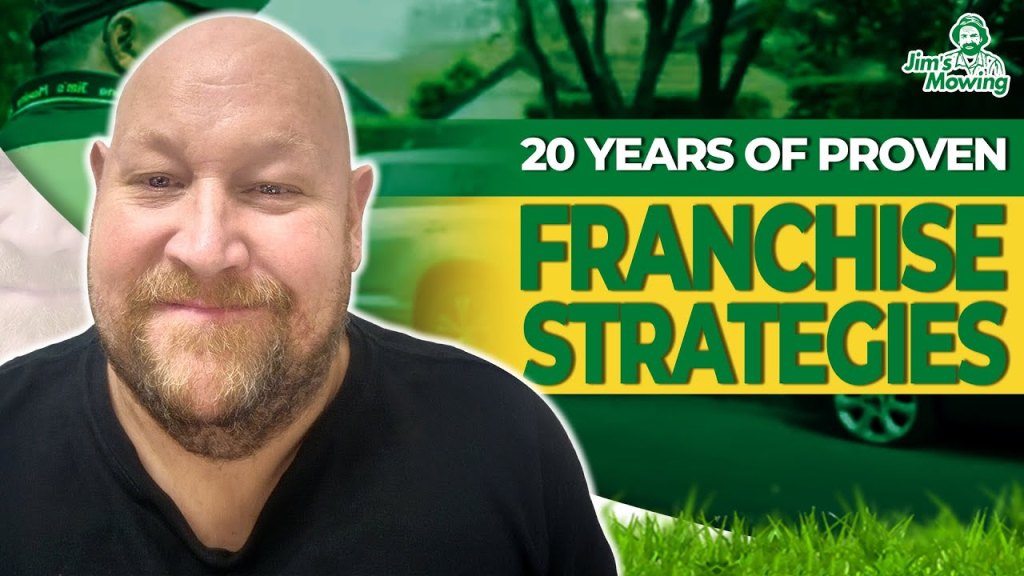
In Chris Hansen’s Sydney region, new operators are expected to push towards $2,500 a week within the first one to two months and build about 30 to 45 regular clients by the end of month three. That claim is backed by clear lead-flow numbers, structured support, and a system designed to improve pricing, route density, and repeat work.
In short: Chris Hansen from Jim’s Mowing Sydney says a new Jim’s Mowing franchise operator in his region can work towards $2,500 a week within one to two months, with 30 to 40 leads early and roughly 30 to 45 regular clients by the end of month three. The key levers are structured support, disciplined follow-up, smarter pricing, and Jim’s online system for choosing suburbs, services, and availability.
In this More Than Just Mowing Podcast episode, Jim’s Group regional leader and former franchisee Chris Hansen from Jim’s Mowing Sydney in Castle Hill explains how new operators can work towards $2,500 a week, 30 to 40 early leads, and about 30 to 45 regular clients by month three. Chris’s 25 years in the system, 20 years in the Sydney office, and hands-on use of Jim’s online lead-routing system give this story real operational weight.
A Jim’s Mowing franchise can be a practical, low-risk way into a small business if the operator is coachable and willing to work. Chris Hansen ties the model to real inputs, not vague promises: leads, regulars, pricing discipline, route efficiency, and support. This article breaks down what that looks like in Castle Hill and across Jim’s Mowing Sydney.
Who Is Chris and What Experience Backs These Franchise Benchmarks?
Chris joined as a franchisee about 25 years ago, worked in the field for about three and a half years, then moved into the Jim’s Mowing Sydney office, where he has now spent about 20 years helping franchisees build their businesses.
That matters because this is not theory from the sidelines. It is advice from someone who has done the work, then spent two decades watching who grows, who stalls, and why.
Why Choose a Jim’s Mowing Franchise Instead of Starting Alone?
Chris keeps coming back to one point: the system reduces risk. He talks about professional presentation, a real office in Castle Hill, a clear joining process, training, in-field support, and a structure that makes the business easier to understand from day one.
He also pushes back on the idea that starting alone is cheaper or easier. His view is simple. If you pay for your own marketing, build your own systems, and carry the full burden of mistakes alone, you can easily spend more while learning more slowly. That is why a Jim’s Group franchise opportunity and a clearer breakdown of how franchising fees work matter so much at the decision stage.
What Happens in the First 1–3 Months of a Jim’s Mowing Franchise?
Chris says the early months are about getting physically fit, learning how to quote properly, and building a base of regular work. He estimates that physical adjustment can take about two to two and a half months, even for someone younger and reasonably fit.
The first wins are measurable. In his region, most new operators get 30 to 40 leads in their first few months, convert about 10 to 15 regulars a month, and can build 30 to 45 regular clients by the end of month three. That is the point where the business starts getting easier because the regular base is there.
How Do New Jim’s Mowing Franchisees Reach $2,500 Per Week?
Chris does not pretend there is one universal number. What he does give is a concrete benchmark. In his region, the paid work guarantee sits at $2,500 per week, and he says new operators should be getting to that level within the first month to two months if they engage properly with the system.
He also gives a sharper lead-economics example. Ten leads may cost about $120. If eight convert, that can produce roughly $1,500 in work. If two then become regular clients, Chris says those regulars can be worth about $1,500 to $2,000 each per year in Sydney. That is why his argument is not just about one-off jobs. It is about lifetime customer value. For a broader official context, see how much you can earn with a Jim’s franchise.
How Fast Can You Build 30–45 Regular Clients in 90 Days?
Chris describes two main growth paths. The first is the solo-operator model. He says a single operator realistically only needs about 60 to 80 good regular customers, and some route planning can get that operator close to home and highly efficient.
The second is scale. Chris says there are no extra penalties mentioned for putting on staff, and the model allows operators to add staff, more vehicles, and more work. In his region, he points to Osmond, who runs about four or five vehicles and multiple divisions. That shows the ceiling is not the system. The ceiling is how far the operator wants to push it.
What Systems Help Control Leads, Pricing, and Route Efficiency?
The strongest technical advantage is Jim’s online system. Chris explains that franchisees can choose the suburbs they want, the services they want, and the times they are available for new work. That sounds simple, but it solves one of the biggest problems in service businesses: bad-fit work.
Here is why it works. If a solo operator can filter work by suburb, they can tighten the run and cut wasted travel. If they can filter by service, they can lean into higher-margin work like gutter clearing, hedging, lawn care, or specialised maintenance. If they can filter by availability, they can avoid overload and only pull in work that fits current capacity. That is not just convenient. It is a route-density system, a margin-control system, and a growth-control system rolled into one. It also complements franchisee training and the current Jim’s Mowing franchise start page.
Chris also mentions FMS as the place where he can review a franchisee’s board and spot patterns, especially around underpricing. In one case, that review helped uncover a franchisee doing too much work too cheaply.
What Are the Biggest Early Challenges for New Franchisees?
Chris is blunt about the hard parts. The work is physical. The operator has to adapt to outdoor labour, handle quoting pressure, learn how to improve margins, and stop thinking like an employee who clocks in and clocks out.
He is equally blunt about mindset. The best operators listen, ask questions, follow up on lost leads, and keep making one percent improvements. The ones who make excuses or refuse feedback are far less likely to do well.
Is a Jim’s Mowing Franchise Worth It Based on Real Benchmarks?
Chris’s answer is yes, provided the person is realistic and coachable. He frames the model as easier than going independent because it comes with training, support, systems, brand trust, and lead flow. He also says the franchise fee in his region averages about 8%, which he argues is low compared with other franchise systems.
The more persuasive proof is the behaviour change. Chris says franchisees often get fitter, more engaged with family life, and better connected to partners and children. In Castle Hill and across Sydney, that lifestyle angle sits alongside the money, not behind it.
Inside the Jim’s Mowing Model vs Independent Operator
| Feature | Standard Operator | Jim’s Professional |
| Training | Self-taught or ad hoc | Structured onboarding, supplier exposure, seasonal meetings, and ongoing coaching |
| Leads | Self-generated only | 30 to 40 leads in the first few months in Chris’s region |
| Systems | Manual territory and schedule management | Jim’s online system filters suburbs, services, and availability |
| Branding | Must build trust from scratch | Recognised Jim’s brand, walk-ups, insured, and police-checked trust factors |
| Income Consistency | Depends on the self-built pipeline | $2,500 weekly paid work guarantee in Chris’s region, with a path to 30 to 45 regulars by month three |
“The best part about the business is you can grow it as big as you like. The leads are always there.”
— Chris Hansen, Jim’s Mowing Sydney, Castle Hill
Frequently Asked Questions
In Chris Hansen’s region, the paid work guarantee is $2,500 a week. He says operators should be getting to that level within the first month to two months if they engage properly with the system.
Chris says most new operators get 30 to 40 leads in the first few months, convert 10 to 15 regulars a month, and can reach about 30 to 45 regular clients by the end of month three.
Chris says the average franchise fee in his region works out at about 8%. He presents that as low for franchising and argues that the support and lead flow make it a strong value.
Yes. Chris says there are no extra penalties mentioned for putting on staff, and operators can keep adding vehicles and work if they want to scale. He gives an example of one operator running four or five vehicles.
Chris describes a Castle Hill office, a simple onboarding process, training in Mooroolbark, in-field support every second week, supplier guidance, seasonal meetings, and ongoing technical help with quoting and job quality.
Chris says the online system lets operators choose suburbs, service types, and availability. That helps tighten routes, reduce wasted travel, and pull in work that suits the operator’s stage, niche, and capacity.
Key Takeaways
- $2,500 a week is the benchmark Chris gives for early-stage consistency in his region.
- New operators can work towards 30 to 45 regular clients by month three if they convert leads properly.
- The real system edge is control over suburbs, service mix, and availability through Jim’s online platform.
- Solo operators can build a strong business on 60 to 80 good regulars, while growth-minded operators can add staff and vehicles.
- The business case is not just about upfront jobs. Chris’s own lead example is built around repeat value, better pricing, and regular clients.
Build a Jim’s Mowing Franchise with Proven Systems
Get Reliable Lawn Care Backed by Proven Systems
If you want lawn mowing and garden maintenance in Castle Hill, Sydney, or the wider Jim’s Mowing network, the customer case here is simple: professional standards, insurance, police checks, and a complaints process that gives you a real fallback if something goes wrong. That is a very different proposition from hiring an unstructured independent operator with no wider system behind them.
Request your free quote from Jim’s Mowing today.
Start a Jim’s Mowing Franchise With Clear Income Benchmarks
Chris Hansen’s message is clear. The opportunity is not just mowing lawns. It is building a tighter, more profitable service business with support, systems, and room to grow.
Learn more about joining Jim’s Mowing at jims.net or call 131 546 today.