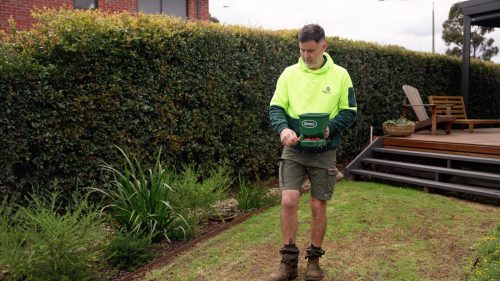
Mitchell Dennis started his Jim’s Mowing franchise in March, turned over about $150,000 by Christmas, and expects to finish his first full year at roughly $180,000. He grew from about 25 bought clients to around 55 regulars, with one $16 lead turning into a landscaping job worth about $13,000.
In short: Mitchell Dennis joined Jim’s Mowing because he wanted a business of his own and saw enough real-world proof to make the move. In his first year, he turned over about $150,000 by Christmas, expects roughly $180,000 for the full year, and built his round from about 25 bought clients to around 55 regulars.
Mitchell’s first year shows that a Jim’s Mowing franchise can become a strong local business when the owner stays organised, takes a wide range of work, and uses the support around them well. His results matter because they show real turnover, real client growth, and a practical view of how much a Jim’s Mowing franchise can earn in year one without hype or guesswork.
Mitchell built a solid first year by combining mowing, landscaping, upsells, clean admin, and fast lead follow-up. He started with a lean first week, pushed through a slower winter, then had a very strong spring. This article covers what he did before Jim’s, why he joined, what he earned, how he grew, and whether he believes the franchise is worth it.
What Made Mitchell Finally Decide to Start His Own Business?

Before joining Jim’s, Mitchell already knew he wanted to run a business. What he did not know was what kind of business it would be.
He says he saw an ad for Jim’s, looked into it, and then watched a lot of YouTube content, including day-in-the-life videos and podcasts. That content helped sell him because it showed what the work actually looked like, what the possibilities were, and how the day-to-day side of the business worked.
That matters because he did not join on blind optimism. He joined after seeing enough detail to believe it was a real small business opportunity, not just a sales pitch.
Why Did Mitchell Choose a Jim’s Mowing Franchise After Initial Doubts?
Mitchell says he was doubtful at first. His initial reaction was that it might just be “Jim’s” and not worth taking seriously, which reflects the way some people view large franchise brands.
That changed when he looked further into it. He says the content helped him realise that it was still his own business and that Jim’s was the name behind it, not something controlling every part of his working life. That is why his story is useful for anyone comparing owning a franchise with going out completely alone.
He also saw that the model gave him knowledge, support, and a clearer picture of the opportunity than a basic job ad or website could. That transparency was a major reason he moved forward with a Jim’s Mowing franchise.
What Were Mitchell’s First Weeks in Business Really Like?
Mitchell started on the first working day of March. His first week was slow. He says he turned over about $1,700, and that only happened because one customer gave him a $500 job. Without that, it could have been closer to a $1,200 week.
He does not describe that as a failure. He says it was dry, there was not much grass around, and he simply picked up other work, such as pruning and landscaping, to get through. That attitude was important because he did not expect the business to be fully built in week one.
He also bought about 25 clients when he started. That gave him a base to build from, but he still had to turn those early weeks into something bigger through effort and consistency.
How Did Mitchell Grow From Slow Weeks to $150K by Christmas?
From March until Christmas, Mitchell says he turned over about $150,000. He also says his first full year should come in at roughly $180,000. He notes that he took about three weeks off during that time, which makes the result stronger.
That is the clearest answer to the question of how much Jim’s Mowing franchisees earn in year one. In Mitchell’s case, the business did not explode immediately, but it built steadily and then lifted hard in the spring.
His best month was November. He says he turned over about $20,000 in that month from mowing alone, with no landscaping revenue included. He describes it as five grand a week, week after week.
Winter was the opposite. He says some winter weeks were just about paying the bills, and at that stage, he only had about 30 clients. From September onward, the business really picked up.
This is also where the conversation around Jim’s Mowing cost becomes clearer. Mitchell says he pays roughly $250 a week in fees, including lead fees, which works out to about $1,000 a month. He says that the value is “absolutely more than fair” based on what he gets back.
How Did a $16 Lead Turn Into a $13,000 Job?
Mitchell grew from about 25 bought clients to around 55 regulars in less than a year. That is a solid first-year jump and shows that he was not relying only on the clients he started with.
He also made the most of bigger opportunities. His standout example is a $16 lead that turned into a landscaping job worth about $13,000 in the end. The job took seven or eight days, mostly on his own, and involved new turf and reshaping the whole backyard.
That one job says a lot about lead value and why cheap lead costs can still produce serious returns.
He also learned not to think of himself as only a mower. He talks about doing pruning, mulching, stump grinding, pressure washing, gutter cleaning, landscaping, and odd jobs. The wider service mix gave him more ways to earn, especially when the mowing side was quieter.
What Systems and Habits Helped Mitchell Build Momentum?
Mitchell is disciplined with admin. He says he gets on Xero every morning, reconciles all transactions, sends invoices after each job from the car, and does not let paperwork stack up. He also quotes from his phone when needed.
That routine matters because clean admin protects cash flow. It also stops the business from becoming harder than it needs to be.
He says he likes responsibility and likes doing things his own way. That autonomy suits him, but he also makes it clear that being organised is part of why it works. The business is not just about turning up and mowing grass.
He also improved his sales approach over time. One of his lessons is that he should have been more proactive early on in telling clients about extra services. He now believes new franchisees should take every job they can safely handle and should not assume clients already know the full range of what they offer.
Training also helped. Mitchell says the six-day training was awesome and that there was nothing bad he could say about it, especially the mowing side. For people researching franchisee training, that is a useful real-world endorsement.
What Challenges Did Mitchell Face in His First Year?
The first challenge was weather and seasonality. Winter was slow, and some weeks were only enough to cover bills. Mitchell says that changed once spring arrived and demand lifted sharply.
The second challenge was the physical side. He works on steep ground in South East Melbourne and says some days hit 30,000 steps, much of it on slopes. He says you do wake up sore, and you need proper sleep if you want to keep going.
The third challenge was pace. Mitchell says one of his key lessons is not to rush. You want to get through as many jobs as possible, but if you rush, customers may want you back to fix things.
He also had to push back on misconceptions about franchising. Customers sometimes assumed Jim’s was taking a 20 per cent cut, but Mitchell explains that this is not how his arrangement works. That kind of clarity matters when people are researching how franchising fees work.
Does Mitchell Think a Jim’s Mowing Franchise Is Worth It?
Yes. Mitchell is clear that it has been an awesome move for him and his family. He likes the variety, the sense of responsibility, the fact that no one is dictating every move, and the freedom to build the business at his own pace.
He also believes the long-term upside is strong if you stay with it, build a solid round, add employees, and keep improving equipment and systems. He says he is not trying to become a millionaire overnight, but he does believe that if you stay in Jim’s Mowing long enough and build it well, it becomes a good life.
That is a grounded way to judge a Jim’s Mowing franchise. It is not sold as a shortcut. It is shown as a real business with real upside.
What Key Numbers and Milestones Defined Mitchell’s First Year?
| Growth Stage | Result Achieved | What This Demonstrates |
| First Week | About $1,700 turnover, with a $500 job lifting the total | Early weeks can be lean and still lead to a strong year |
| By Christmas | About $150,000 turnover from March to Christmas | Strong first-year revenue is possible with steady execution |
| Peak Month | About $20,000 in November from mowing alone | Spring can dramatically lift earnings |
| Lead Value | A $16 lead became a landscaping job worth about $13,000 | Small lead costs can create major returns |
‘The lead fee, I’ve had a $16 lead that turned into a $12,000 landscaping job.’
– Mitchell Dennis, Jim’s Mowing franchisee in Belgrave
Frequently Asked Questions
Mitchell says he turned over about $150,000 from March until Christmas. He also says his full first year should finish at roughly $180,000.
His first week was about $1,700 in turnover. He says that the total was helped by a $500 job and could easily have been closer to $1,200 without it.
Mitchell says he bought about 25 clients when he started. By the time of the interview, he had grown that to around 55 regular clients.
He says he pays roughly $250 a week in fees, including leads. That works out to about $1,000 a month, and he says the value is more than fair.
His biggest example was a $16 lead that turned into a landscaping job worth about $13,000 in the end. It took around seven or eight days, mostly on his own.
No. He also did landscaping, pruning, mulching, stump grinding, pressure washing, gutter cleaning, and other odd jobs. That wider service mix helped him grow revenue faster.
Mitchell points to slower winter weeks, weather, and the physical strain of steep properties. He also says one of the biggest lessons was not to rush through jobs just to squeeze more into the day.
Key Takeaways
- Turned over about $150,000 by Christmas in his first year
- Expects roughly $180,000 for the full first year
- Grew from about 25 bought clients to around 55 regulars
- Did about $1,700 in his first week during a dry autumn
- Turned over about $20,000 in November from mowing alone
- Pays roughly $250 a week in fees, including leads
- Turned a $16 lead into a landscaping job worth about $13,000
- Built growth through mowing, landscaping, upsells, and clean admin
What Should You Know Before Starting a Jim’s Mowing Franchise?
Mitchell’s story shows what can happen when someone wants ownership, backs themselves, and uses the Jim’s system properly. He did not have a perfect start, but he built a strong first year through steady work, smart habits, and a willingness to take on more than basic mowing.
If you are considering a Jim’s Mowing franchise, his results give you a practical benchmark for what the opportunity can look like in real life.
Learn more about joining Jim’s Mowing at jims.net or call 131 546 today.