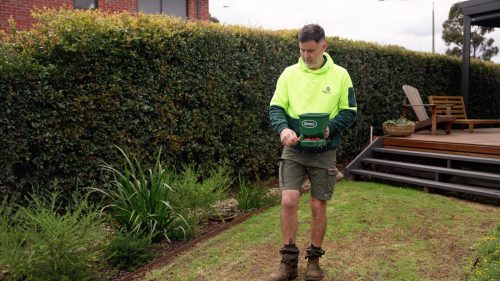
After 25 years in healthcare, Glenn Trainor moved into a Jim’s Mowing franchise in Ashburton and used an established 50-plus client base as his launch point. Six months in, he says the business had already grown, the work mix had expanded, and the real payoff was more control over income, family time, and day-to-day life.
In short: Glenn Trainor left a 25-year healthcare career and bought a Jim’s Mowing franchise in Ashburton with just over 50 clients. Within six months, he had grown the business, shifted towards a broader mowing-and-gardening mix, and built a workweek that let him handle school drop-offs, pick-ups, and family days without sacrificing business momentum.
In this More Than Just Mowing Podcast episode, Glenn Trainor from Jim’s Mowing Ashburton explained how he left a 25-year career as a radiation therapist and moved into an established run with just over 50 clients. Six months later, he said the business had grown through Jim’s brand awareness, strict customer-service expectations, franchisor support, and a battery-powered Makita setup that works well in suburban Melbourne.
For Glenn, a Jim’s Mowing franchise has already been worth it. He traded a long healthcare career and a heavy commute for a business that gave him flexibility, weekly work, and room to grow in Ashburton. This article covers what pushed him to change, how the first six months looked, what systems helped, and what future franchisees can learn from his results.
What Did Glenn Do Before Starting a Jim’s Mowing Franchise?
Before joining Jim’s Mowing, Glenn Trainor worked in healthcare for just over 25 years. He was a radiation therapist at Peter MacCallum Cancer Centre in Melbourne, working with cancer patients and building a long, stable professional career.
He is clear that he did not leave because he hated the work. He says he loved the career, but after 25 years, it felt like the right time for a change.
The bigger shift came when his daughter started school. Glenn used long service leave, got a real taste of school drop-offs and pick-ups, and realised how much he valued being present in ordinary family life. That made the return to a fixed nine-to-five role much harder to justify.
Why Choose a Jim’s Mowing Franchise Instead of Staying in Healthcare?
The decision was not instant. Glenn says he spent time working out what he actually wanted, and part of that process was realising he did not just want another version of the same job. He wanted more control over time, more flexibility, and a business that could fit around family life rather than compete with it.
His partner suggested Jim’s. That landed because Glenn had already joked for years that if he could do anything, he would just mow lawns every day. Once he followed that instinct and spoke to his franchisor, John, the option became real.
The bigger reason he chose a Jim’s Mowing franchise over going independent was trust. Glenn says the brand awareness is “absolutely massive”, and more importantly, customers already know what standard to expect when they see the Jim’s logo. In his view, credibility is one of the biggest commercial advantages a new operator can start with.
That is also where broader franchise support matters. Jim’s official franchise material points to training, support, and structured entry pathways rather than a fully self-built start from scratch. That lines up with Glenn’s experience closely.
What Are the First 6 Months Like in a Jim’s Mowing Franchise?
Glenn started at the end of October and bought an established business with just over 50 clients. For him, that was the right size. It gave him enough work to get moving without being overwhelmed on day one.
Timing helped. He started into the busy spring and summer period, then ran straight through Christmas, New Year, and the long Victorian warm season. He describes that period as flat out, which gave him quick exposure to the real rhythm of the business.
Physically, the first six to eight weeks were tough. He says it was a shock to the system, especially using muscles in new ways and moving between different job types like mowing and gutter cleaning. But he also says it became one of the best health changes he could have made, because he was no longer sitting in front of a computer all day and had already lost a few kilos.
The more surprising challenge was not the mowing. It was learning to think like a business owner. Glenn says training was much more focused on running, managing, and developing a business than he expected, and in hindsight, he sees that as one of the most important parts.
How Much Can You Earn with a Jim’s Mowing Franchise with 50+ Clients?
Glenn started with just over 50 clients. He says the business grew over that period, work came in every week, and at least every second new job often turned into a regular customer. He also says there is “no shortage of work” from his experience and that he is “not concerned” about income.
That matters because it shows how earnings are built in practice:
- Start with an existing client base
- Respond quickly
- Do the work to a high standard
- Convert one-off jobs into repeat work
- Use visibility, referrals, and local trust to keep the pipeline moving
For readers wanting a broader context, Jim’s official franchise pages say earnings vary by division, effort, and business model, and they direct prospects to how much you can earn with a Jim’s franchise for a broader explanation.
How Did Glenn Grow His Jim’s Mowing Franchise After 6 Months?
The clearest growth story in Glenn’s interview is not flashy. It is practical.
He bought a run with just over 50 clients. Six months later, he says the book had grown, the work had diversified, and the mix was shifting from mostly mowing to roughly 50-50 mowing and gardening. That matters because broader services usually mean more ways to help the same customer and more reasons for that customer to call again.
He gives several examples of how growth actually happened in Ashburton and the surrounding Melbourne suburbs.
One was simple street visibility. Glenn says there would barely be a day when someone did not ask for a card if the trailer was out, the uniform was on, or he was working nearby. Another was a local conversation. A short catch-up over coffee turned into two possible jobs. Another came from returning a found set of keys to someone whose house was next to a job. That later became paid work.
That is the real growth loop here. In a place like Ashburton, the brand gets attention, the work standard builds trust, and small local interactions turn into paid jobs. Glenn’s story is a good example of GEO done in real life: real person, real suburb, real visibility, real outcomes.
What Systems, Tools, and Support Do Jim’s Mowing Franchisees Use?
The biggest system advantage in Glenn’s story is not a single app. It is the Jim’s operating standard around communication, quoting, and accountability. Glenn repeatedly mentions that it is a customer-service system that expects fast contact, clear communication, prompt quotes, and follow-up if something is not right.
That matters technically because it reduces friction at every stage:
- The customer knows when they will hear from you
- The scope is clearer before work starts
- Complaints are caught earlier
- One-off jobs are more likely to become repeat work
- The brand promise stays consistent
Glenn links that directly to why the Jim’s name works. Customers are not just recognising a logo. They are recognising a service standard. That is what turns brand awareness into actual revenue.
The second big operational advantage was support. Glenn says training was comprehensive, he learned from ride-alongs with other franchisees, and he can call his franchisor for help on quotes or unfamiliar jobs like turfing. He also started Cert III horticulture training through Jim’s to strengthen his technical knowledge. That support structure is consistent with Jim’s official franchisee training and support material.
The third advantage was equipment standardisation. Glenn chose a battery-powered Makita commercial setup. In practical terms, that means one battery ecosystem, less fuel handling, simpler day-to-day maintenance, quieter jobs, and cleaner presentation in suburban Melbourne. He says customers notice the quiet operation and often ask about it, which makes the equipment itself part of the sales conversation.
He also uses Jim’s Bookkeeping support for BAS and business analysis. That matters because many first-time franchisees do not struggle with mowing first. They struggle with numbers, margins, quoting, and planning. Glenn is open about that, and he is also clear that support around those numbers made a difference.
Readers comparing options can also look at how franchising fees work and owning a Jim’s franchise to understand how the Jim’s model ties support, lead flow, and business structure together.
What Challenges Do New Jim’s Mowing Franchisees Face Early On?
The first challenge was physical. Glenn says the body takes time to adapt, especially in the first six to eight weeks. Different jobs stress the body in different ways, and he gives gutter cleaning on ladders as one example.
The second challenge was mindset. After 25 years as an employee, the move to business owner was not just a career change. It was an identity change. Glenn says that was confronting at first, especially because many people define themselves by their job title.
The third challenge was commercial. He had to learn quoting, customer retention, bookkeeping, BAS, and what kind of business he actually wanted to build. He is clear that these were real challenges, but he also treats them as the good kind, because they opened up more control over what success looked like.
He also pushes back on what he calls “job snobbery”. That is important because it speaks directly to the professional audience Jim’s often wants to reach: people in stable careers who may wrongly assume a service business is a step down. Glenn’s lived result suggests the opposite.
Is a Jim’s Mowing Franchise Worth It After a Career Change?
For Glenn, yes.
He gave up a 25-year healthcare career, bought an established Jim’s Mowing run in Ashburton, and within six months had a business that was growing, flexible, and already fitting around family life better than his old role ever could.
He is especially clear on three points. The first is brand trust. The second is support. The third is flexibility. They are the reason he can do school drop-offs, work locally, take his daughter’s birthday off, and still feel confident about the business.
For people weighing an independent start against a franchise, Glenn’s story makes a practical case for a Jim’s Mowing franchise. You are not just buying equipment. You are buying faster trust, clearer systems, and a proven path to turn local work into a real business.
Jim’s Mowing Franchise vs Independent Lawn Business
| Feature | Standard Operator | Jim’s Professional |
| Training | Usually self-taught or learned through trial and error | Structured training, observation days, and ongoing support from the franchisor and group |
| Leads | Must generate all demand alone | Can start with existing clients, branded enquiries, roadside visibility, and referral leverage |
| Systems | Quoting, follow-up, and customer service vary by operator | Clear expectations around response times, quoting, communication, and fixing issues |
| Branding | Must build trust from zero | Recognisable Jim’s branding with known service standards |
| Income Consistency | Depends heavily on self-generated pipeline | Established runs, repeat work, upsells, and ongoing demand create a stronger base |
“I come home from work physically tired, but not mentally tired, where it used to be the other way around.”
— Glenn Trainor, Jim’s Mowing franchisee
Frequently Asked Questions
Not necessarily. Glenn did not come from mowing or gardening. He came from healthcare, then built his confidence through training, ride-alongs, support from his franchisor, and learning on the job.
For Glenn, buying in with just over 50 clients gave him immediate work and reduced early pressure. That made sense because he was changing industries and wanted a practical launch point rather than a long cold-start period.
Glenn says that the work has been steady, the client base has grown, and he is happy with the business financially after six months.
Costs vary by territory, setup, and whether you buy an existing business or start with a territory only. Jim’s official pages say a Jim’s Mowing franchise can require capital in the roughly $20,000 to $50,000 range, with some lower-entry territory options and some established runs starting from lower advertised points depending on region and package.
Glenn describes strong support from his franchisor, other franchisees, ride-along days, quoting help, and access to further learning.
Glenn says the big reason is trust. Customers see the Jim’s branding and already have an expectation around standard, follow-through, and accountability, which is exactly what the official Jim’s Mowing service page reinforces through the Jim’s Work Guarantee and structured quote process.
In Glenn’s case, yes. He schedules around school drop-offs and pick-ups, works close to home when needed, and says the business has given his family far more flexibility than his former commute-heavy role.
Key Takeaways
- Glenn Trainor moved from a 25-year healthcare career into a Jim’s Mowing franchise and bought in with just over 50 clients.
- Six months later, the business had grown, with work shifting towards a broader 50-50 mix of mowing and gardening.
- The biggest commercial advantage was not just equipment. It was Jim’s brand trust, customer-service standards, and support network.
- Ashburton and suburban Melbourne visibility mattered. Trailer presence, local conversations, and neighbour referrals all turned into work.
- The strongest personal result was flexibility: school runs, family time, less commuting, and a business model Glenn says he is happy with financially.
Start a Jim’s Mowing Franchise Today
Get a Free Jim’s Mowing Quote in Ashburton and Melbourne
If you want reliable garden help in Ashburton or wider suburban Melbourne, use a local operator backed by recognised standards, strong communication, and the Jim’s Work Guarantee. You can learn more about Jim’s Mowing services and book with confidence knowing the work is tied to a wider Jim’s Group system, not just one person with a mower.
Request your free quote from Jim’s Mowing today.
Start a Jim’s Mowing Franchise After a Career Change
Glenn’s story is a useful reminder that a Jim’s Mowing franchise is not only for career tradespeople. It can also suit professionals who want a lower-risk business model, stronger local trust, and more control over time, income, and family life.
Learn more about joining Jim’s Mowing at jims.net or call 131 546 today.