After leaving FIFO work in Western Australia, Peter Rogers took a 50% income hit in year one, stayed the course, and got back to almost the same income within four years. More importantly, he swapped airport dread, long absences from home, and mining fatigue for control, repeat customers, and a business built on trust.
If you’re considering making a similar move, learn how to own a franchise and what’s involved in getting started.
In short: Peter Rogers joined a Jim’s Mowing franchise 11 years ago after leaving FIFO work in WA. He says the first year meant about a 50% income reduction, but within four years, he had climbed back close to his old earnings while building a more flexible and enjoyable working life. His biggest lesson is simple: customer service, repeat clients, and steady growth matter more than trying to chase fast money.
Peter did not leave FIFO and instantly replaced that income. He accepted a short-term financial step back, used the Jim’s Mowing franchise system to build a client base, and created a business that gave him more control, stronger customer relationships, and a better lifestyle.
A Jim’s Mowing franchise can work very well for the right person, but Peter’s story shows it works best when you treat it like a real business, focus on customer service, and give the transition time. For a realistic breakdown of income potential, see how much you can earn with a Jim’s franchise.
Peter Rogers spent years in mining and FIFO work before making the jump into Jim’s Mowing. In his first year, he says household income dropped by about 50%, but he was prepared for it and kept going. Four years later, he says he was back close to his old FIFO income, with a business that let him work for himself, stay home, and enjoy the job again.
What Peter Rogers Did Before Starting His Jim’s Mowing Franchise
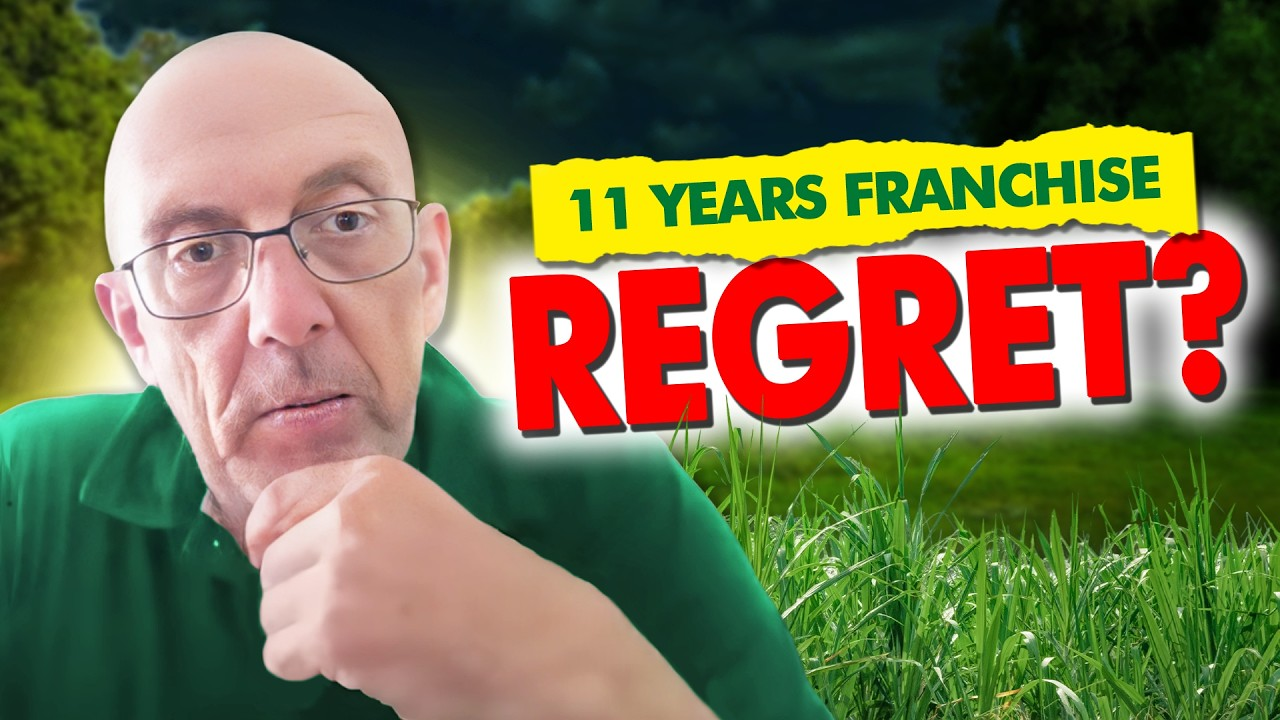
Before joining Jim’s, Peter worked FIFO in Western Australia and spent 21 years in the mining industry, including around 12 years doing FIFO full-time.
He says he had reached his use-by date in the industry. The money was strong, but the lifestyle was wearing thin. He describes the weekly airport routine as something he had come to dread. He also says FIFO can leave you feeling like a visitor in your own home when you are back.
That matters because many people looking at a Jim’s Mowing franchise are not just chasing income. They are also chasing control, family time, and work that feels more tangible.
Peter had another advantage. He had already seen the brand from the customer side. A Jim’s franchisee had mowed his lawn for about four years before he made the jump himself. That made the idea feel real, not theoretical.
Why Peter Chose a Jim’s Mowing Franchise After FIFO
Peter and his wife looked at the options and asked a simple question: Should he go independent, or should he back a known brand?
The answer came down to recognition, systems, and support.
As Peter puts it, nobody knew “Peter’s Lawn Mowing Service”, but everyone knew Jim’s Mowing. That brand mattered from day one. He saw the value in getting a business in a box rather than trying to build credibility from scratch.
He also pushed back on the common advice to avoid franchise fees. His view was practical. The fees were not just about a name. They were about advertising, lead flow, training, support, and having someone to call when he hit a problem.
For Peter, a Jim’s Mowing franchise was not just about mowing lawns. It was about reducing the risk of starting from zero. Learn what support is included in franchisee training and how it helps new operators get up to speed.
What the First Weeks in a Jim’s Mowing Franchise Really Feel Like
Peter remembers the nerves clearly.
That first call to a customer felt big. He says his hands were shaking. He had practised the conversation in his head before dialling. Once he made the call and relaxed into speaking naturally, it got easier.
That is an important point for new franchisees. Confidence did not come before action. It came after a few calls, a few quotes, and a few wins.
Peter says things began to feel easier by around the third or fourth week. The first real boost came when he saw the first payment hit his bank account. That was the moment the business stopped feeling theoretical and started feeling real.
He also learned quickly that systems matter. For example, calling customers back instantly sounded good in theory, but in practice he found a slight delay of 10 to 15 minutes worked better for him. It gave him time to breathe, gather himself, and sound more settled on the phone.
How Much Can You Earn? Peter Rogers’ Real Income Timeline
First, he is honest about transition income. In his own case, the first year meant about a 50% reduction compared with FIFO income. That is a big drop, and he does not sugar-coat it.
Second, he says it took him roughly four years to get back to almost the same income he had been earning in FIFO.
Third, he shares numbers that help paint the commercial picture for mowing operators more broadly:
- Some new operators who started with no mowing experience were turning over $10,000 to $15,000 a month after 12 months.
- A strong regular client base in Perth is around 100 to 120 regulars.
- One regular client should be worth about $1,500 a year.
- A rainy-day gardening job can still bring in around $300 to $400 a day.
- For quoting, he says a simple lawn mowing might sit around $70 to $90, while harder jobs can go past $100.
Those numbers matter because they show how a Jim’s Mowing franchise grows. It is not just about one-off jobs. It is about stacking regulars, building referrals, and creating reliable annual value from each customer. You can also understand the cost structure in this guide on how franchising fees work.
What Helped Peter Grow and Build a Strong Customer Base
Peter keeps coming back to the same answer: customer service.
Not fancy marketing. Not hard selling. Not trying to upsell every person every time.
He says the best franchisees build relationships and trust, then let that turn customers into raving fans who refer friends and neighbours.
That shows up in practical habits:
- Communicating clearly
- Taking before-and-after photos
- Leaving the property looking sharp
- Invoicing cleanly
- Treating the customer like a person, not an account balance
Peter believes the best operators win because they create a wow factor. No clippings on the mailbox. No mess left at the front door. No vague communication. Just a property that looks better than expected.
He says that is what gets the message every franchisee wants on a Friday afternoon: “Thanks very much. The place looks awesome.”
The Key Systems and Strategies Behind Peter’s Long-Term Success
Peter’s advice is practical and tested.
1. Convert leads properly
He says new franchisees can get themselves into trouble by taking too many leads too quickly. His rule of thumb is to stay in control and focus on quality. In spring and autumn, volume can get out of hand fast.
His view is simple. Once a lead lands in your phone, that customer is yours to lose.
2. Get quoting right before scaling
Peter does not believe new operators should rush into hiring staff. He says you need to understand your pricing, your schedule, and your hourly targets first.
He also shares a smart mindset for quoting. Sometimes you need to leave $10 on the table to win a long-term regular. In his view, it is better to lock in $70 every two weeks than quote $90 once and never see that client again.
3. Use the first job to open the door
While mowing, he is always looking for “$20 notes”. That means spotting the next trim, cleanup, or add-on that can be done later, rather than trying to squeeze every dollar out of the first visit.
That is how you build lifetime value.
4. Keep a rainy-day job in your back pocket
Peter advises franchisees to line up hedge trimming, mulching, tree work, and gardening jobs for wet days or slower periods. That helps smooth seasonal income instead of letting winter or rain cut earnings too hard.
5. Match equipment to your area
He also stresses not overspending on equipment early. Start with the best gear you can afford, but only buy what you actually need. A good mower, whipper snipper, and blower are enough to start. Let the customer base tell you when it is time to add more.
The Biggest Challenges Peter Faced During the Transition from FIFO
The biggest challenge was not mowing.
It was the transition.
Peter had to adjust financially, physically, and mentally. Moving from FIFO to a Jim’s Mowing franchise meant less money at first, more time at home, and a complete lifestyle reset for both him and his family.
He is clear that your family has to be ready for the change too. That part often gets ignored.
There is also the physical side. Peter says people coming from office work, taxi driving, bus driving, or other sedentary jobs can find it hard in the first few months. He advises people to start walking daily and doing bodyweight work before they begin. In his experience, most people adjust within about two months and are work-hardened after the first year.
That physical shift can also become a major upside. He says it is common to see new franchisees lose five to 10 kilos in the first couple of months, with some losing even more.
Is a Jim’s Mowing Franchise Worth It for Career Changers?
Peter’s answer is yes, for the right person.
Not because it is easy.
Because it is simple, proven, and scalable when done properly.
He believes the right franchisee is someone who can talk to customers, deliver quality, build trust, and stay consistent. He says mowing itself is the easy part. Customer service is the real differentiator.
He also believes the brand matters. In his experience, the Jim’s name generates trust, walk-up enquiries, repeat work, and commercial opportunities that would be harder to win alone.
His advice is not to overcomplicate it. Wear the uniform. Ring the customer. Do what you said you would do. Respect the property. Respect the person. Convert the regulars. Enjoy the work.
That is not flashy advice. It is better than flashy advice. It is the kind that lasts.
Explore more about this opportunity on the Jim’s Mowing division page.
Before and After Jim’s
| Metric | Before Jim’s | After Jim’s |
| Income | FIFO-level income | About 50% lower in year one, then back close to FIFO income by year four |
| Hours | Four days on, three days off, with weekly airport travel | Local workdays from home base with direct control over schedule |
| Stress | Dreaded going to the airport and living around the roster | More ownership, faster feedback, and a clearer link between effort and results |
| Control | Working inside a mining structure and answering to others | Own customers, own ute, own standards, own growth path |
‘This job is not about mowing lawns and cutting trees. This job’s about customer support, customer service.’
Peter Rogers, Jim’s Mowing franchisee
Frequently Asked Questions
It varies. Peter says he has seen some operators with no previous mowing experience reach $10,000 to $15,000 a month after 12 months. He also says a strong client base is around 100 to 120 regulars, with one regular customer worth about $1,500 a year.
Peter says confidence improved by about the third or fourth week, but replacing previous FIFO income took much longer. In his case, it took roughly four years to get back close to that level.
No. Peter says he has seen people come in needing to learn how to start a mower and mow a lawn properly. In his view, customer service and quality matter more than prior mowing experience.
Peter’s answer is customer service, quoting, and lead conversion. He says not to overcomplicate the equipment side early and not to take on more leads than you can handle well.
Usually not. Peter advises franchisees to understand pricing, scheduling, and business basics first. He says the best operators scale steadily, not too fast.
Customer service, clean communication, before-and-after photos, trust, and strong referral behaviour. Peter says top operators treat customers like people, not cash cows.
It can be, but Peter says you need to be financially and mentally ready for the adjustment. He also says your family needs to be ready, because the lifestyle shift is real.
Key Takeaways
- Peter joined Jim’s Mowing after leaving FIFO and marked 11 years in the business.
- He took about a 50% income reduction in year one, then got back close to FIFO income within four years.
- He says some brand-new operators can reach $10,000 to $15,000 a month after 12 months.
- A strong regular client base is around 100 to 120 customers.
- One regular client should be worth about $1,500 a year.
- The biggest growth lever is customer service, not aggressive upselling.
- Before-and-after photos, clean communication, and referral-driven growth all matter.
- Peter believes mowing is the easy part. Customer support is the real business.
- He advises steady scaling, careful quoting, and not rushing into employees.
- For many people, the lifestyle shift is just as important as the income shift.
Find Out What’s Available in Your Area
If Peter’s story sounds like the kind of change you are looking for, the next step is simple. Find out what Jim’s Mowing franchise opportunities are available in your area and what support comes with them.
Submit an Enquiry to Speak With a Jim’s Mowing Franchisor
Want to know whether a Jim’s Mowing franchise is the right fit for your goals, location, and budget? Submit an enquiry at jims.net or call 131 546 to speak directly with a Jim’s Mowing franchisor about available territories, startup requirements, and what the business can look like in your area.