Although fertilisers are a vital part of producing healthy plants they can also cause substantial environmental destruction and should be used cautiously. Applying unnecessary amounts of fertilisers can result in the movement of nutrients into waterways triggering algal blooms and other environmental complications.
There are 2 key ways of fertilising your garden:
1) You can use soil improvers to help change the configuration of the soil while still providing nutrients to the plants
2) You can deliver direct fertiliser to your plants to encourage growth, flowering and fruiting.
 SOIL IMPROVERS
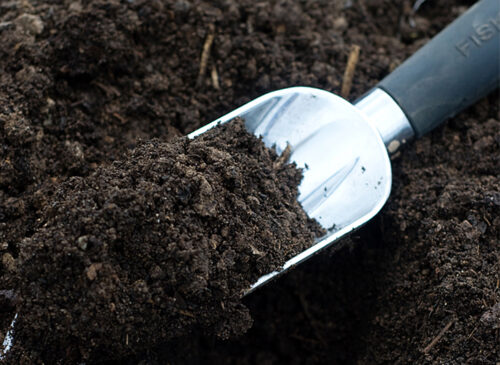
Cow or sheep manures, planting compost or worm castings can be used as soil improvers. They can;
- escalate levels of organic matter in the soil
- improve soil structure
- increase water absorption and retention
- upsurge microbial and worm activity, thus aerating the soil for better root growth
- create nutrients available to the plants in small, practical doses.
These can be rotated through the soil at planting time, or you can add these to the top soil in spring to provide some additional nutrients for new leaf growth.
FERTILISERS
The sort of fertiliser you use is determined by the specific plants you have in your garden.
Slow release fertilisers
The simplest and safest method of fertilising is to use a slow release fertiliser. Several of these will only become active when the soil is above a particular temperature or moisture level, so plants will absorb and utilize them only when they are actively growing and require nutrients the most. The majority of slow release fertilisers comprise of all the elements required for healthy plant growth and flowering.
Soluble fertilisers
Many of these are used to provide a rapid surge of nutrients to plants, and will then seep out of the soil quickly. This type of fertilising can become costly and time-consuming because you need to repeat applications. Nutrients leached from this particular sort of fertiliser can cause algal problems in nearby waterways, so care should be taken if you decide to use them. They are usually only used annually for fast leaf and flower promotion. Other components that are beneficial are;
- Seasol – seaweed based product which helps reduce transplant shock, and can promote health in unhappy plants. Mix with water and apply after planting or transplanting.
- Ash from a wood fire – contains a small amount of Potassium, which is useful for good flowering and/or fruiting. Also good for general health and the strengthening of plant cells. Can be or applied around the base of plants or scattered on top of mulch and watered in.
FERTILISING AUSTRALIAN PLANTS
Most Australian plants grow naturally in soils that are low in nutrients and can suffer from the application of fertilisers that are strong, and/or high in phosphorus. As a general rule, stick with types that contain less than 3% Phosphorus. An application of slow release fertiliser in Autumn, along with a dose of Sulphate of Potash (high in potassium) will probably be all your native garden needs for the year. Feel free to use soil improvers for soil and plant health.
FERTILISING EXOTIC PLANTS
The use of universal fertilisers is the easiest and safest way to fertilise most exotic trees and shrubs. Ultimately, there are many types specific to certain plants, for example; Camellia and Azalea food. These can be used to provide all the fundamentals in the correct doses, but are not always essential for good plant growth and flowering. Pursue information from a horticulturist about fertilisers for specific plants. Otherwise, simply stick to soil improvers and a general all-purpose slow release fertiliser. Sulphate of Potash can be used to inspire strong stems, and good fruiting and flowering.
WHEN TO FERTILISE
Most plants only use fertiliser when they are enthusiastically growing (usually spring and autumn). An application of slow release fertiliser in spring and autumn will keep the majority of plants happy for the year. Some exotic plants are ‘gross feeders’, which will require more fertiliser. Check with a horticulturist for precise necessities.
HOW MUCH FERTILISER TO USE
Suggested application amounts can differ; some can be way too high! Applying a reduced amount than the brand suggests is always safest for both the environment and for your plants and your wallet. You can reapply if the plants do not respond after roughly 4 weeks. The following list contains essential plant nutrients and what they benefit.
- Magnesium – Plant food production. Epsom salts, dolomite.
- Potassium – Strengthens plants and builds up disease resistance. Promotes flowering and fruiting.
- Sulphate of Potash – seaweed, ash.
- Phosphorus – Important for flower, fruit, seed and root development.
- Calcium – Flower formation and healthy root growth. Can cause alkalinity in acid soils.
- Nitrogen – Leaf growth. All general purpose fertilisers and animal manures.
And of course our team at Jim’s Mowing can help with all your garden and plant fertilising – call us today on 131 546 or book online for a free, no obligation quote.